Should World Jai-alai Tolerate Players Ripping Refs on Live Stream?
March 16, 2026: At least on two occasions now, players have come on the live stream after winning the match and criticize how their referees are performing.
It happened during the last week on last season and recently happened again a couple of weeks ago. Players come on the live broadcast – totally at the expense of World Jai-alai on their own “network” and rip the refs for the performance. Missing calls happens in every sport, but when gambling is directly involved, things can get sticky. Yes, football, baseball, basketball players complain all the time. I remember a couple of guys in the 70s playing tennis that were famous for it. It made it interesting, however.
A question one must ask, with a sticky reputation in the past with strangers saying “That game is rigged” which is often heard when the word “Jai-alai” is brought up, one must wonder how can this be allowed? Should players be allowed to criticize the company they work for – on their platform and broadcast, to release their frustrations in such a manner? Were the players fined at all? Is World Jai-alai going to address it, or have they already? Or do they accept it as “that’s the way it is today”.
In the old days, you could not even talk to the players or anybody on the other side of the screen. Frontons even had a guy from the state sit up in the broadcast booth area monitoring things. Even at the grand opening at Calder Jai-alai, I was scolded for trying to talk to Brodie making his pro debut. But he was gone after that performance and never seen again that I know of and has never appeared at Magic City during their 8–9-year run.
What are your thoughts? I’ll start a thread on Tigers site after this story posts. Look forward to hearing the comments.
The sport of Jai-Alai is inextricably linked to the original Miami “Land boom” of the early 1920’s which had been facilitated by the completion of Henry Flagler’s East Coast Railway. Significant real estate speculation, freedom from State income taxes, mild winters & heavy advertising by Carl Fisher led to the migration of approximately 2.5 million residents and extensive development between 1924 & 1926. Jai-Alai would become the State’s first professional sport. In November of 1923 Miami realtors Carson Bradford and Joe Adams founded the South Florida Amusement Company to bring the sport of Jai-Alai to Miami from Cuba.
Jai-Alai had been played professionally for 22 years in Havanna, Cuba beginning in 1901, expanding to 2 seasonal frontons. American visitors to Havana would be well familiar with the novel sport. A 1904 New York Times article referred to Jai-Alai as “Havana’s Favorite Recreation.” Fronton Hialeah was built in 1923 and held its Grand Opening on February 2nd, 1924. The building was constructed of reinforced steel and concrete at a reported cost of about $200,000. Half the interior was dedicated to a playing court of 60 by 150 feet. “The arena included a grandstand for 3,600 spectators, a dance area for 500 and a canteen.”
Public affairs specialist and Florida Historian Jane Feehan describes opening night “drawing capacity crowds, including high society women dressed in sequined gowns and fur wraps and men in dinner or polo jackets. Attendees came from Miami, Miami Beach, from yachts and hotels. The “in” crowd included Hialeah Mayor and Ms. Edward Romfh, Ms. Jane Fisher, wife of Miami Beach developer Carl Fisher, William Jennings Bryan, a Coconut Grove winter resident and political figure of national stature, and James Deering of the Deering Harvester Company and the Vizcaya Estate.” From the outset, much like all of South Florida, Miami was a seasonal town and Jai-Alai would be played Seasonally from 1924 to 1980.
The Hialeah Fronton, would be in operation from 1924 to 1926. During this period Jai-Alai players would play a circuit, traveling between Europe, Mexico, Cuba and the United States. Seasonal operations at the Hialeah Fronton were well attended and plans were made to build a second, competing fronton at 36th Street and 37th Avenue in Miami in the Fall of 1925. The foundation for what would become “Biscayne Jai-Alai” (Later Known as “Miami Jai-Alai” – The “Yankee Stadium” of Jai-Alai) was laid in the fall of 1925 with steelwork going up in January of 1926. Tex Rickard, a colorful and somewhat scandalous boxing promoter, founder of The New York Rangers and builder of the third incarnation of Madison Square Garden was the lead partner in the group which built Biscayne Jai-Alai.
TWO MIAMI FRONTONS – TWO COMPANIES SEPARATED BY 10 MILES IN 1926? While we can dream of a multi-year, intercity rivalry between the two Jai-Alai Frontons in Miami there is no information to support that both facilities were operational at the same time. Based on the state of construction displayed in the Miami News in January of 1926 (steelwork with no roof of walls) principal construction of the Biscayne Fronton would have been completed shortly before “The Great Miami Hurricane,” a Cat 4 storm directly hitting greater Miami on September 17-18, 1926. We do know that the original Hialeah Fronton was damaged beyond repair whereas the newer and larger Biscayne Fronton sustained roof and window damage. Repairs were made and a charity tournament for the Red Cross was held in October of 2026. The Winter of 1926 has always been held as the official opening of “Miami Jai-Alai.” Miami Jai-Alai would stand as the sole North American Jai-Alai Fronton for 27 years. During this time Jai-Alai would be played seasonally, December through April and was sold-out nightly.
“EARLY” ATTEMPTS AT EXPANSION INTO OTHER STATES:
(1) “Jai-Alai Club” New Orleans (1925-1938) Owner / promoter Jow W. Brown ran seasonal Jai-Alai in a multi-purpose facility which included a dance hall and slot machines. It is believed that jai-Alai was played there until 1938. The public was indifferent to the sport and the historic building was destroyed by Hurricane Katrina.
(2) “Chicago’s Rainbow Fronton” (1927-1929) With as many as 3,000 seats, Promoter Al Mann built a sports arena adjacent to the rainbow room. The building was a fronton, designed to host games of Jai-Alai. Mann brought in 35 young men from Spain’s Basque region to play in the fronton, which was operated by a newly formed corporation, the Rainbow Exhibition Company. A Tribune reporter writing under the byline “Mexican Joe” observed: “The spectators weren’t one-tenth as enthusiastic as are the spectators in Mexico City or Havana. The enthusiasm may have increased as the Rainbow came up with a legal loophole allowing a form of betting—spectators could contribute money to a fund for the athletes, receiving a dividend if their selected player won. The operation was plagued by issues related to prohibition. A significant cultural note of the time, Al Jolson came to Chicago in the spring of 1928 and spent a few weeks starring in a show at the Four Cohans theater. He made an appearance at the Rainbow Fronton; “As an indoor sport, Jai-Alai is the most fascinating game I have ever witnessed,” Jolson said, according to a Rainbow advertisement. “It is exciting and full of thrills and when I am not with an audience I am at Fred Mann’s Rainbow Fronton. The crowds that have attended the games the first year of the sport indicate a great future.” Operations ceased in 1929
(3) “New York City’s Hippodrome” (1938-39) The New York Times announced the opening of Jai-Alai in New York City on September 9th, 1938. Promoters Mike Jacobs and Lee Shubert (of the Shubert Theater) in partnership with Richard Berenson brought Jai-Alai to Manhattan for one season. A 150ft court was erected and one of the sport’s earliest stars “Guillermo” was prominently featured.
JAI-ALAI AS A PARIMUTUEL SPORT IN FLORIDA – Florida passed is first Parimutuel wagering laws in 1931 which allowed for PMW wagering on Thoroughbreds and Greyhounds. Ownership of Biscayne Jai-Alai brought-in Richard Berenson through the Bank of Boston to promote and further develop Jai-Alai. Though popular as a sport and unofically serving as Florida’s first professional sport, it was believed to have increased potential with the expansion of Parimutuel wagering in Florida. Jai-Alai joined Thoroughbreds and Greyhounds in 1933 and came under the regulation of State Gaming Authorities. Biscayne Jai-Alai changed its name to Miami Jai-Alai and for the next 20 years the facility at the corner of 36th Street and 37th avenue remained the only facility in the United States where one could watch and wager on the sport of Jai-Alai.
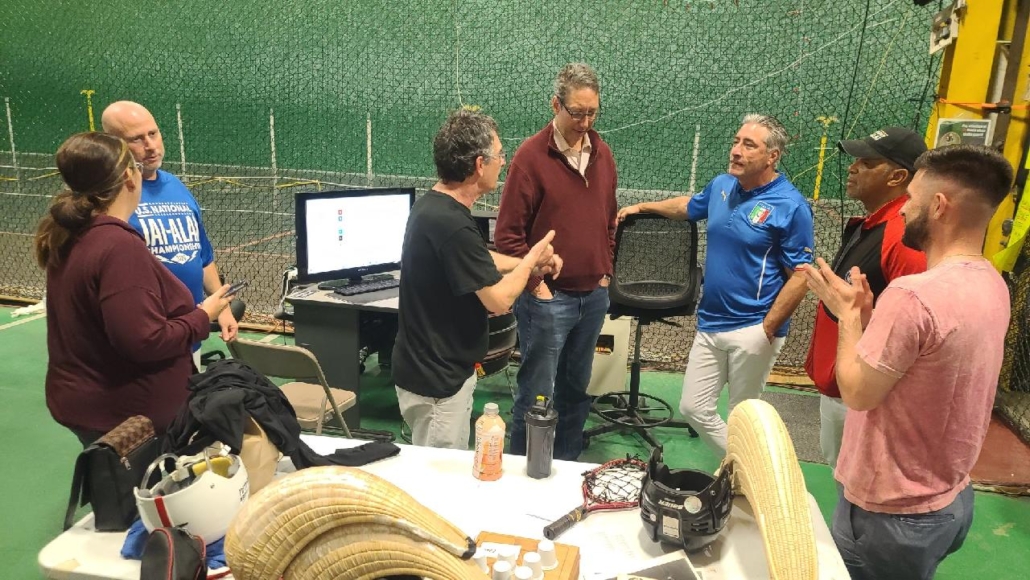
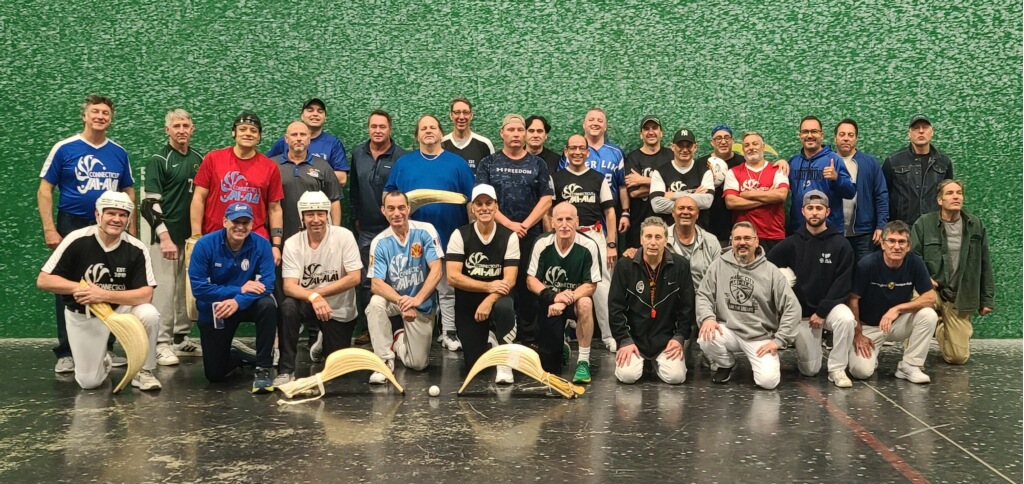
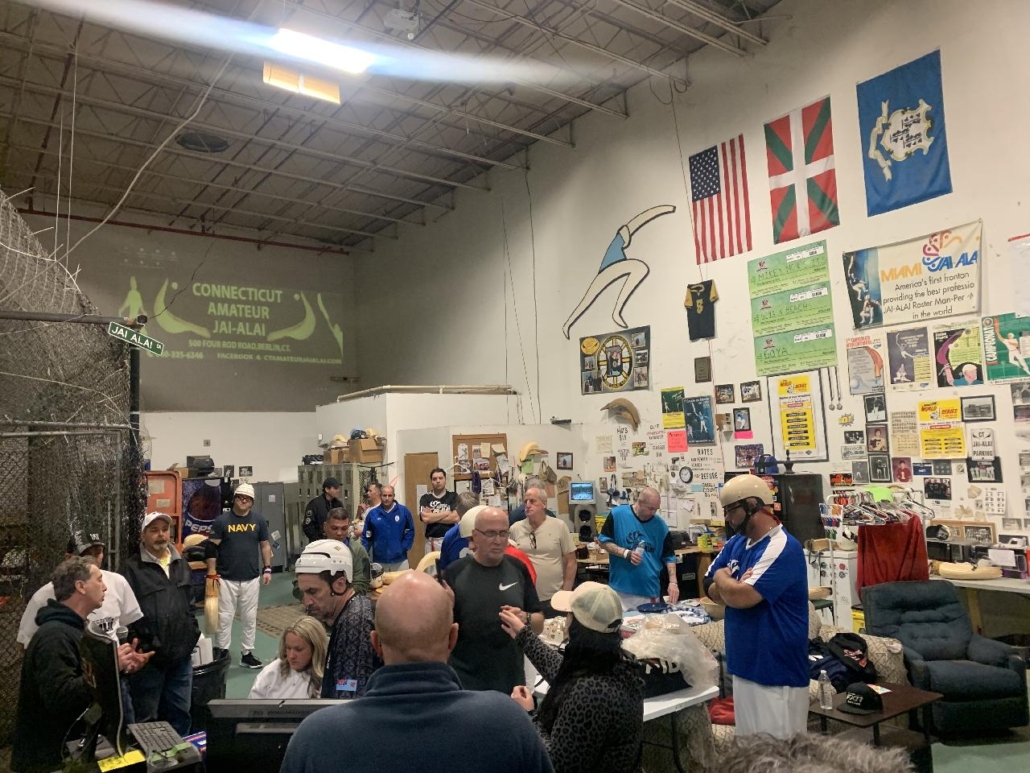
Berlin, Conn: March 16, 2026: The Connecticut Amateur Jai-alai facility led by Matt DiDominzio recently announced a new date for their upcoming spring tournament.
The new dates are May 1 and 2nd – a Friday and a Saturday tournament Quinella Style with switching partners. There will also be two divisions.
Players are required to wear white pants and the cost to participate is $50 per player. Look for the action to begin Friday night around 6:30pm and a good part of Saturday starting around 9am morning, but actual hours are set by the promotor.
You will have plenty of time to sign up with the deadline April 25th. There appears to be a good response, and a decent turnout is expected. Several players from Tampa Bay have committed to play including the “Ant”, Anthony Sutton who has sparingly played in St. Pete due to a hand injury last year.