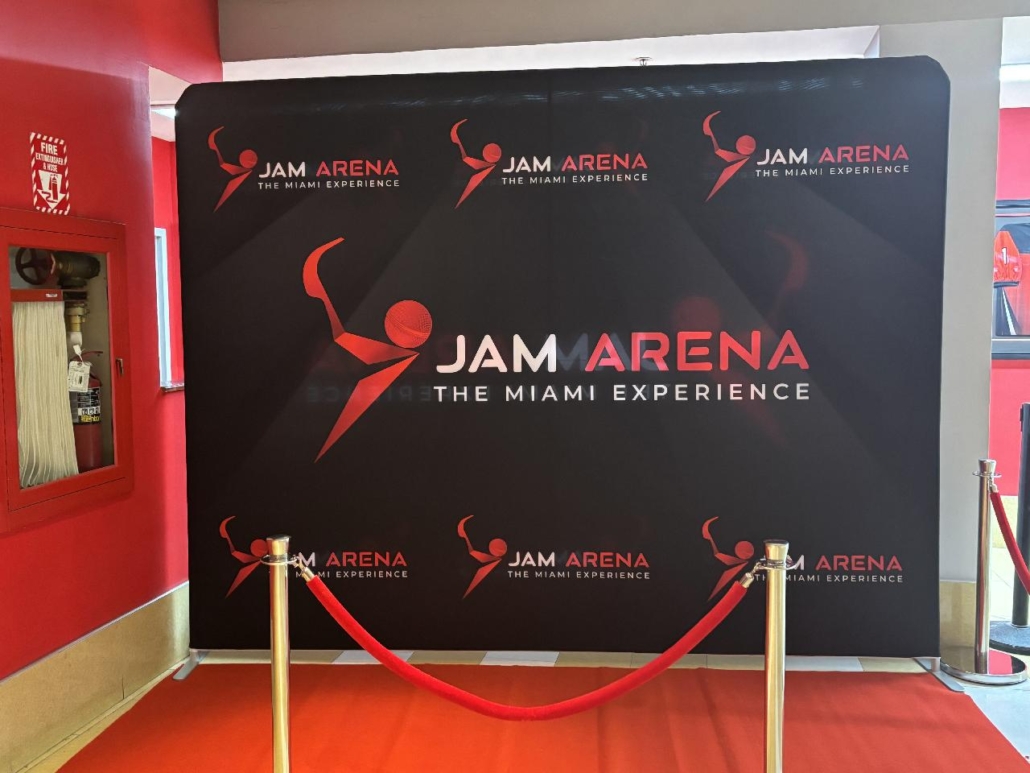
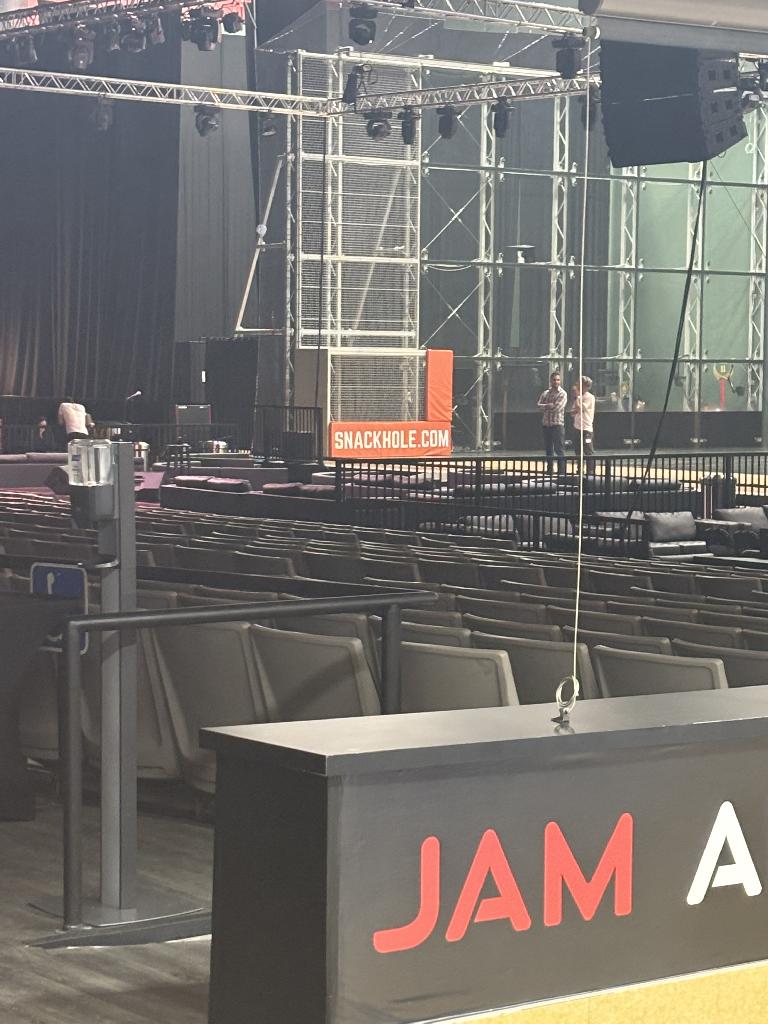
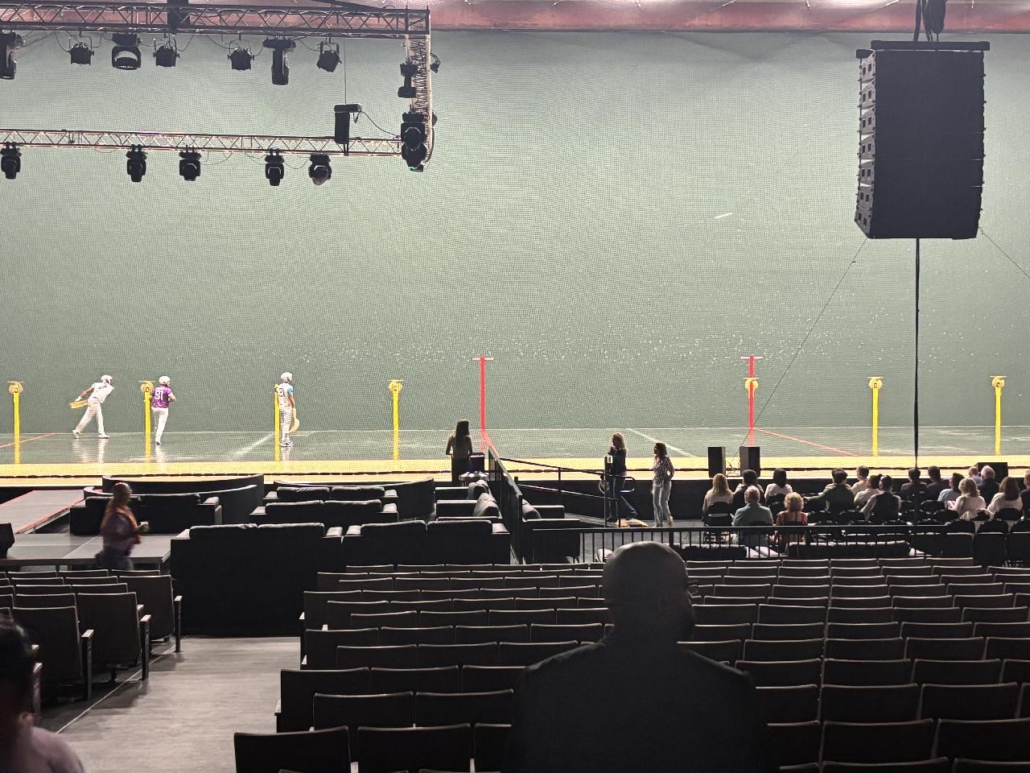
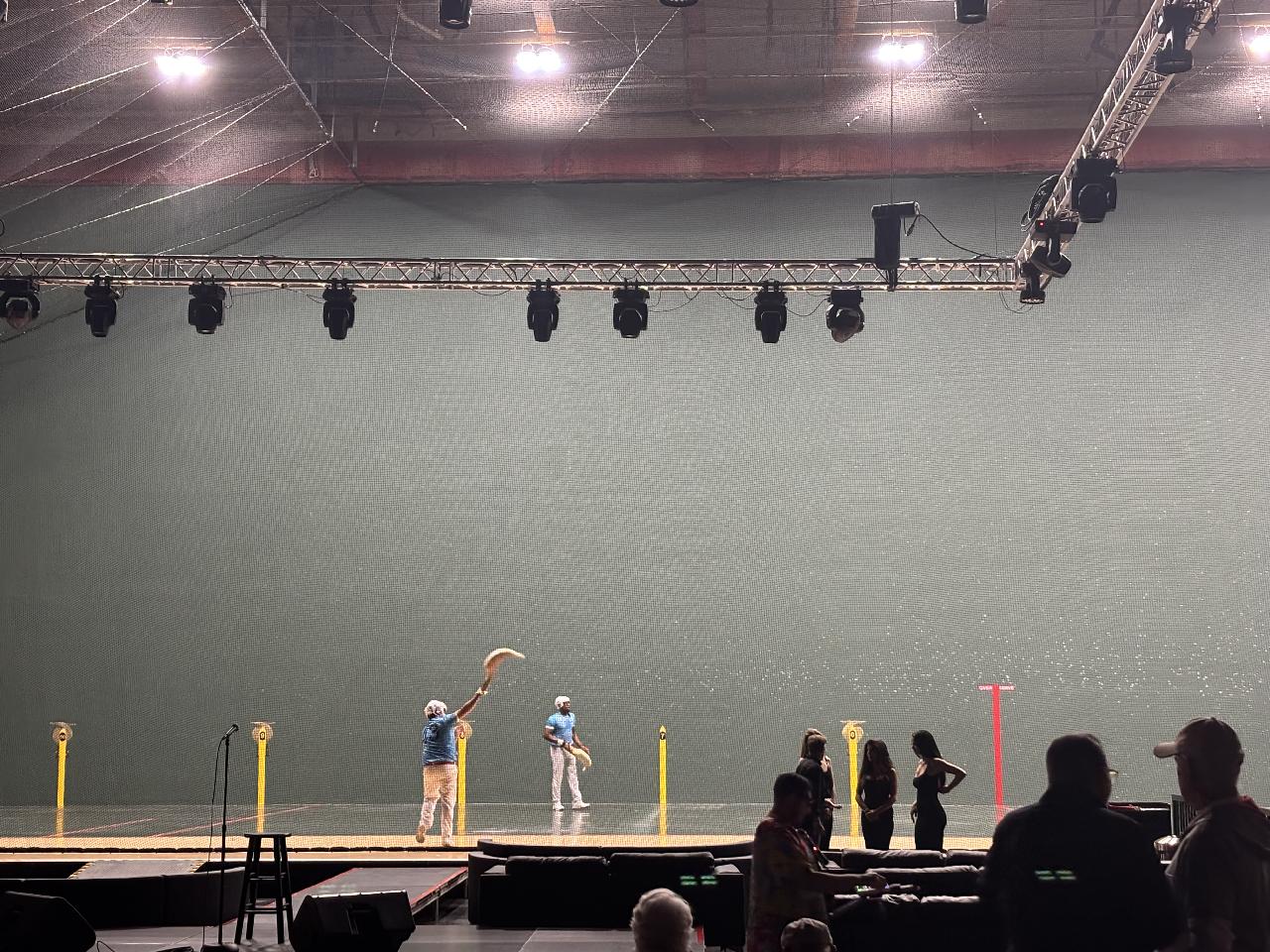
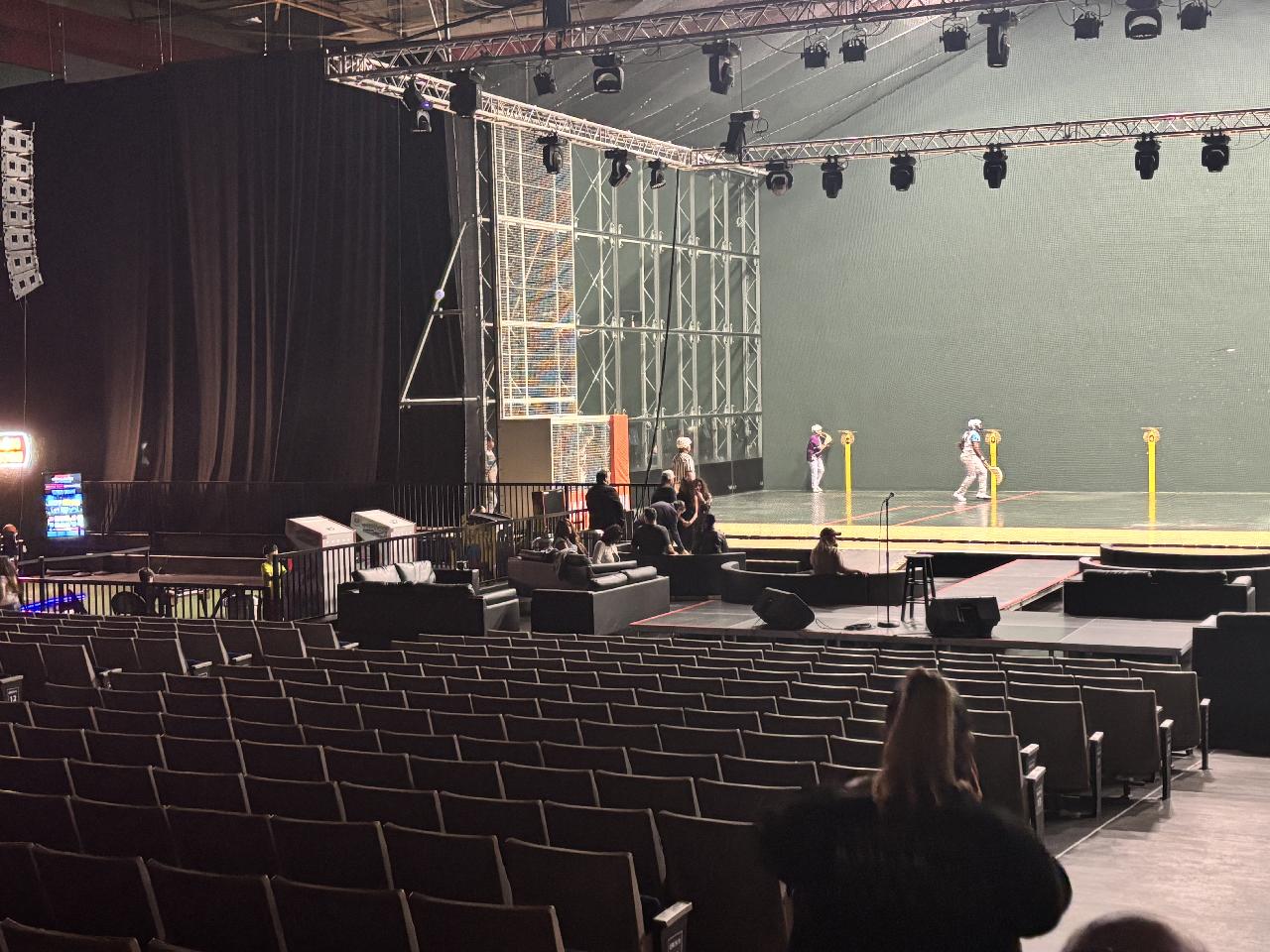
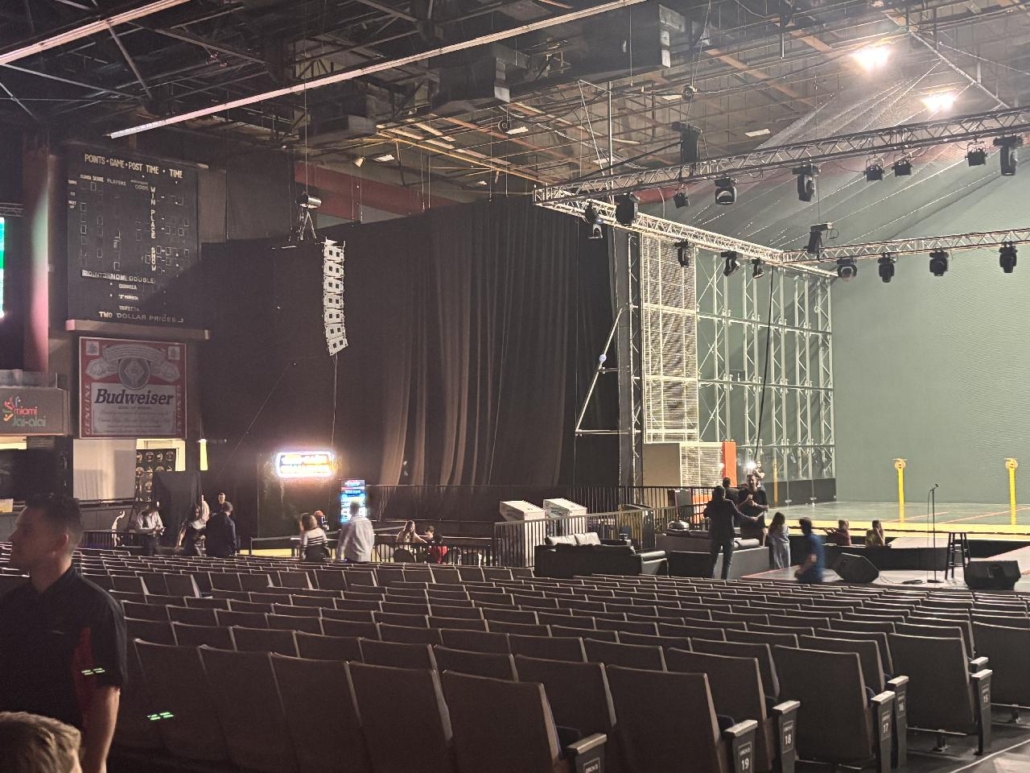
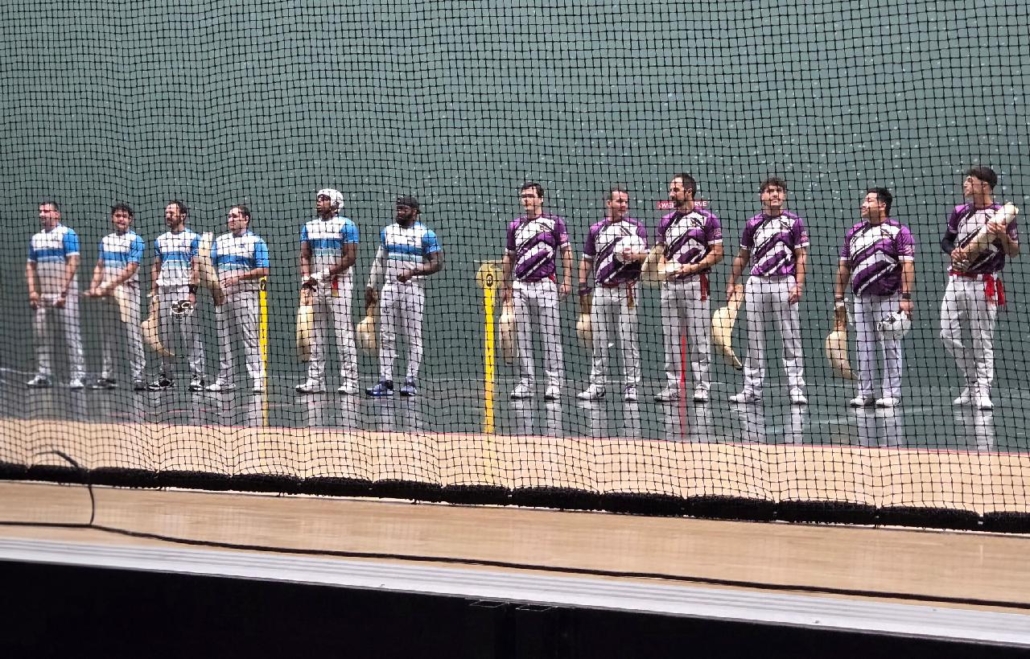
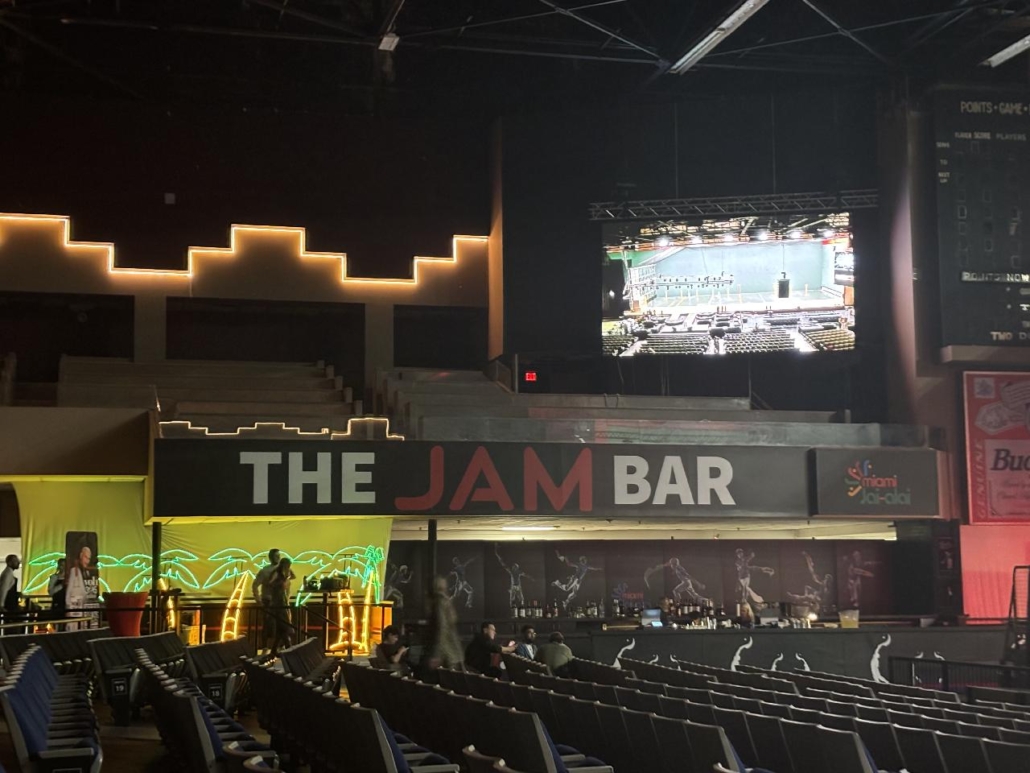
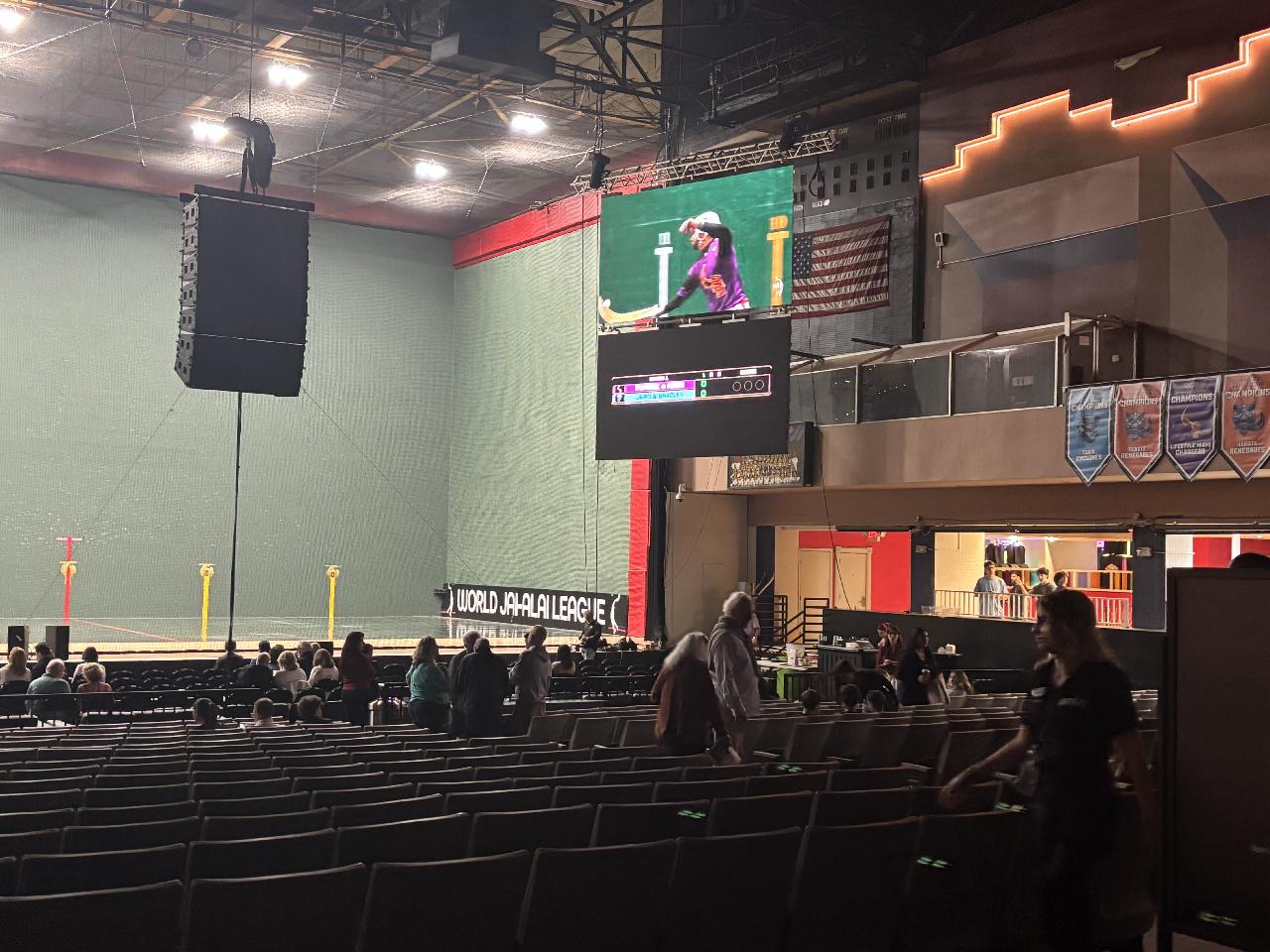
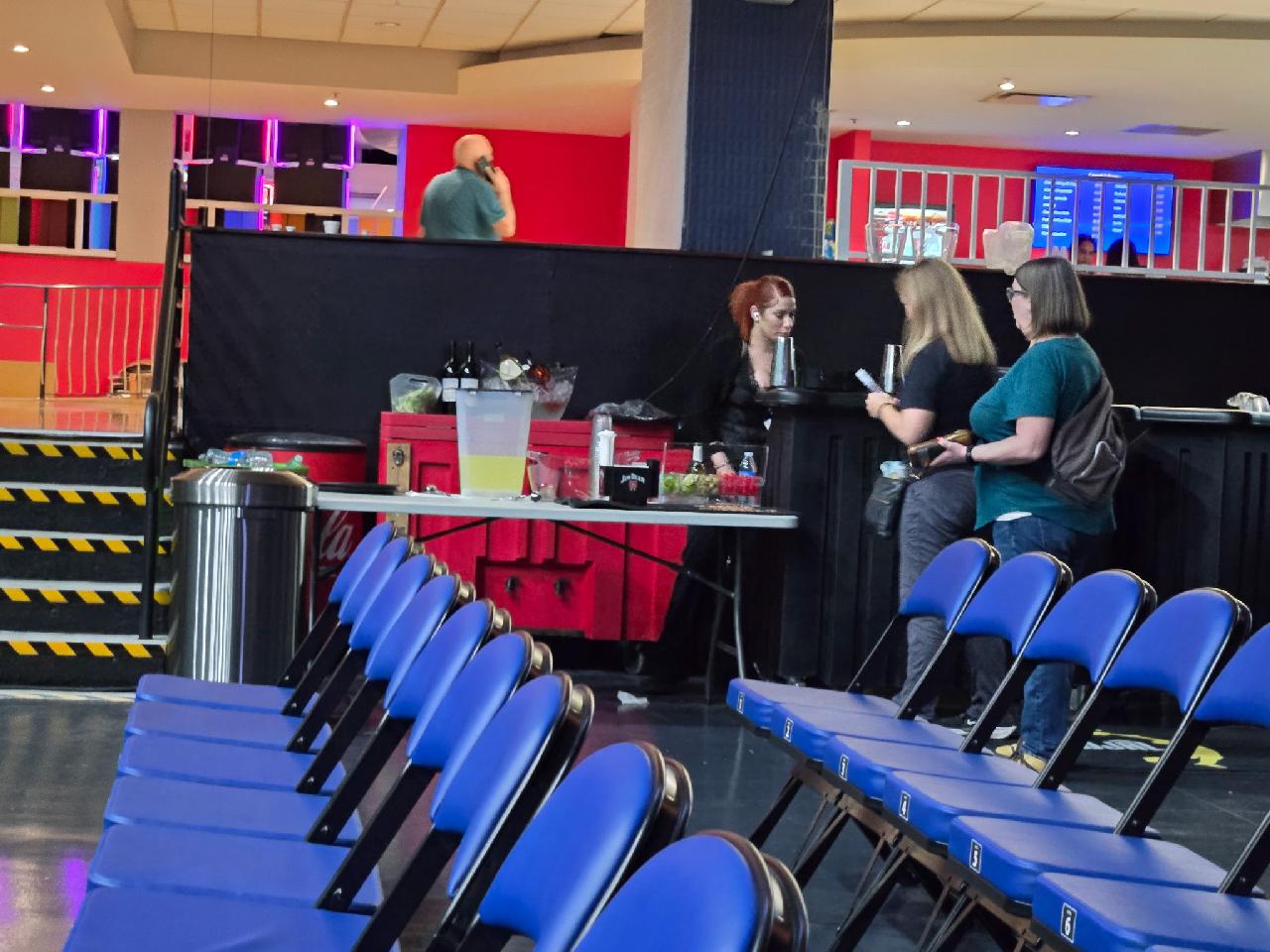
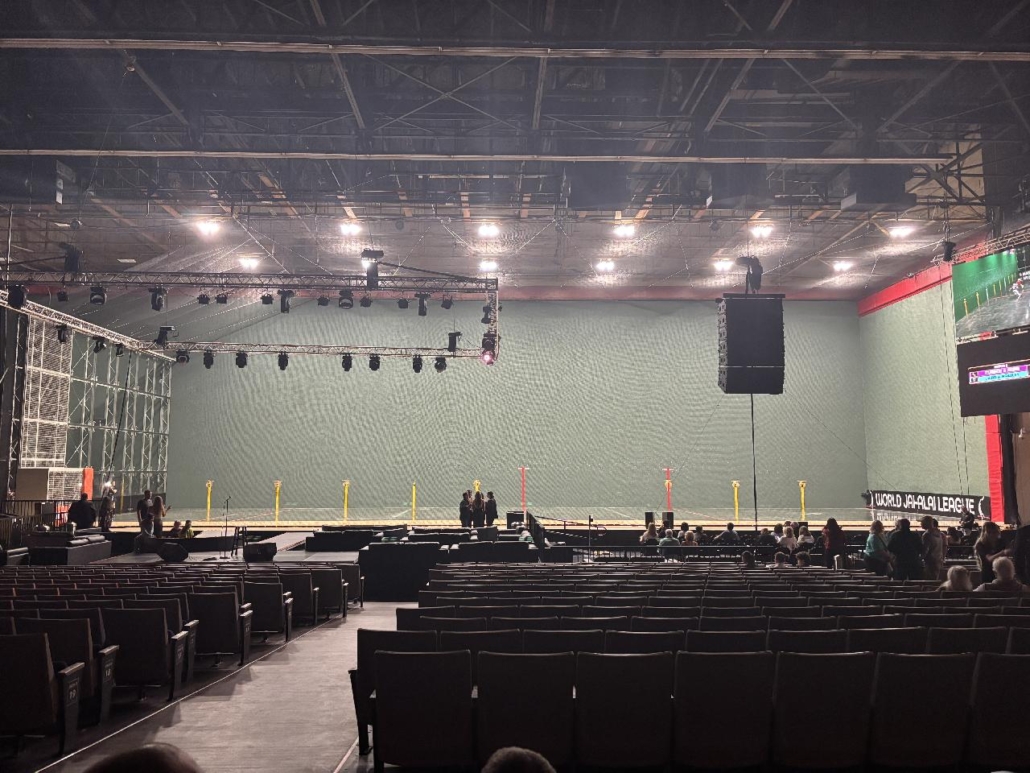
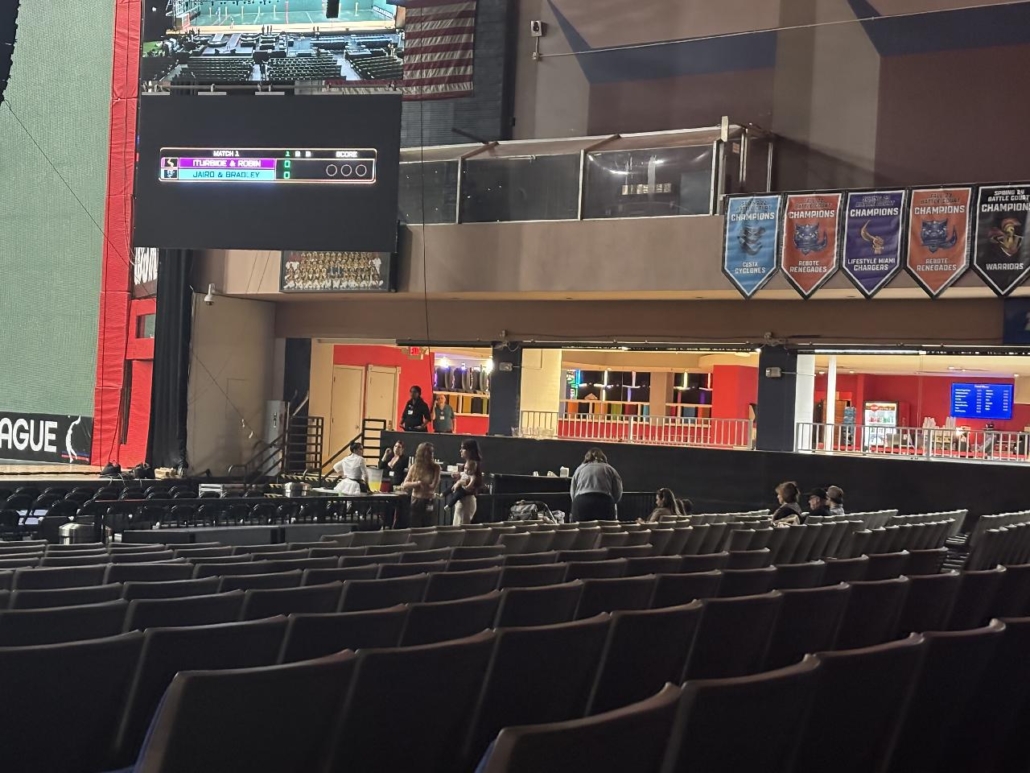
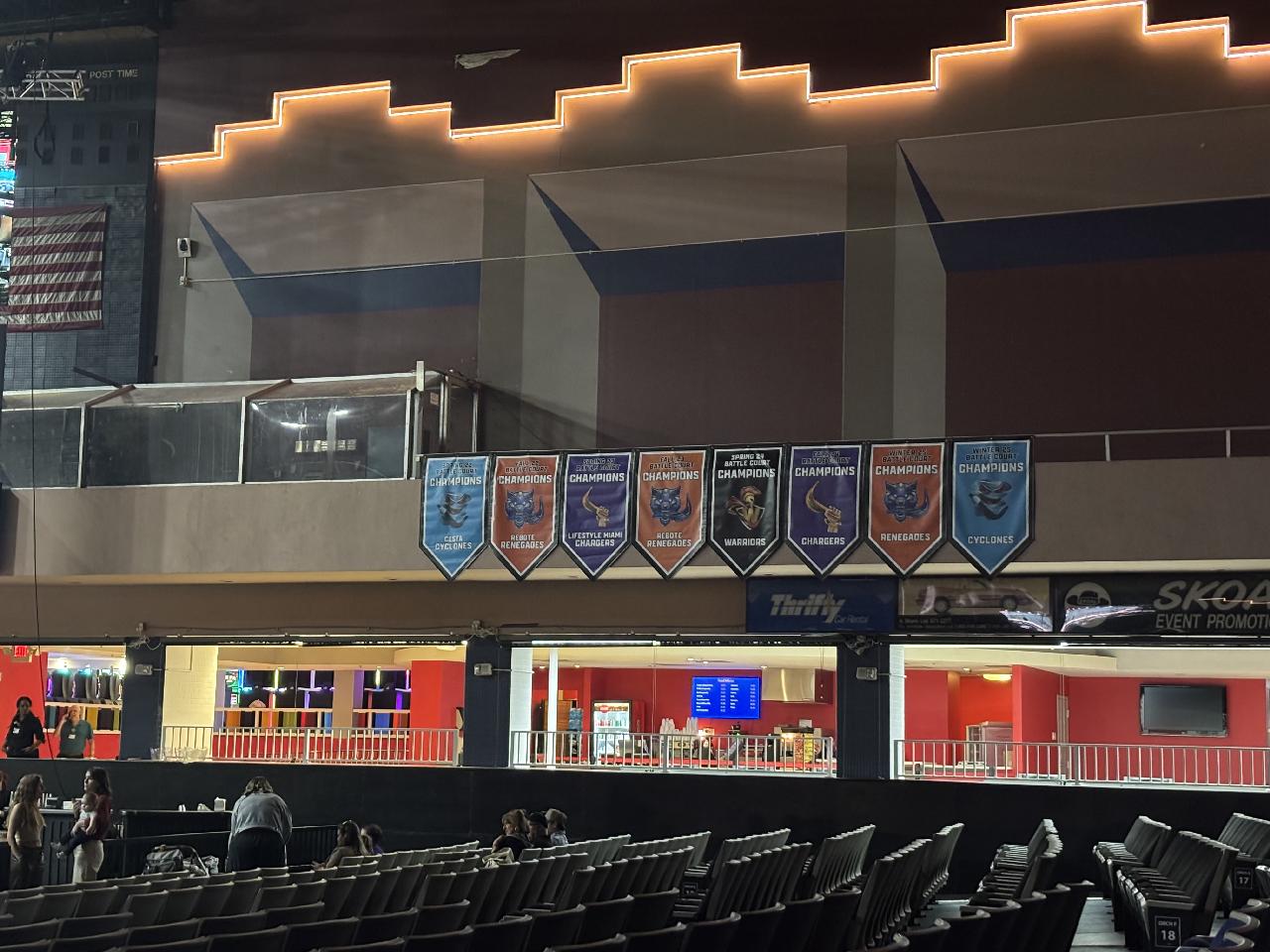
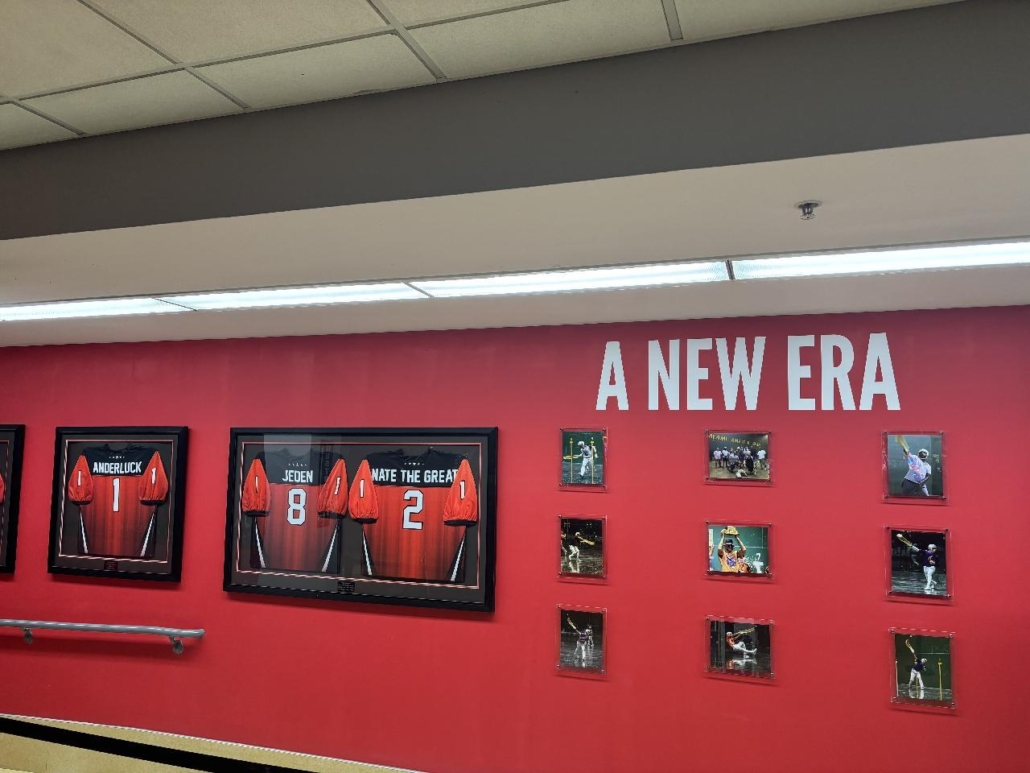
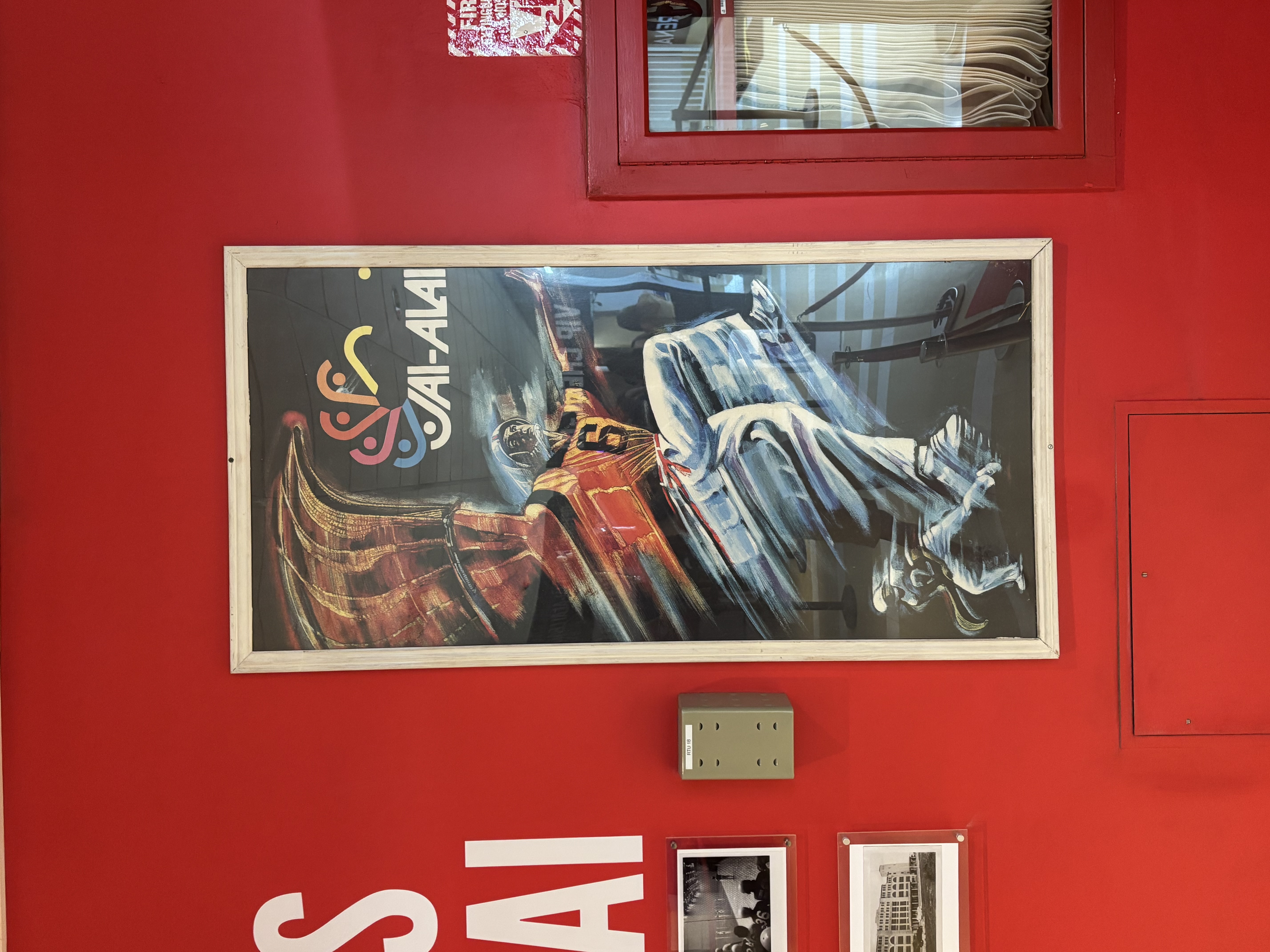
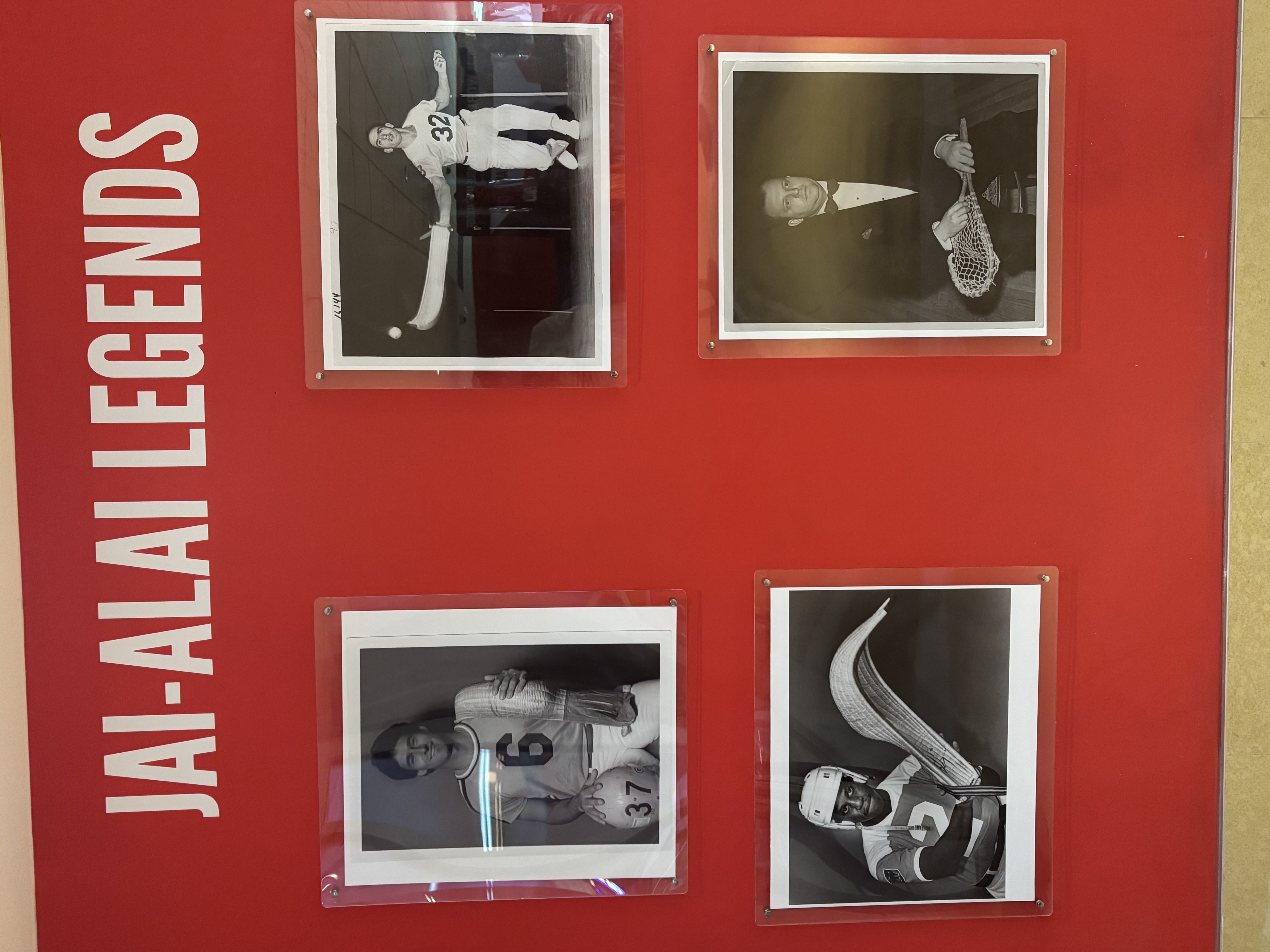
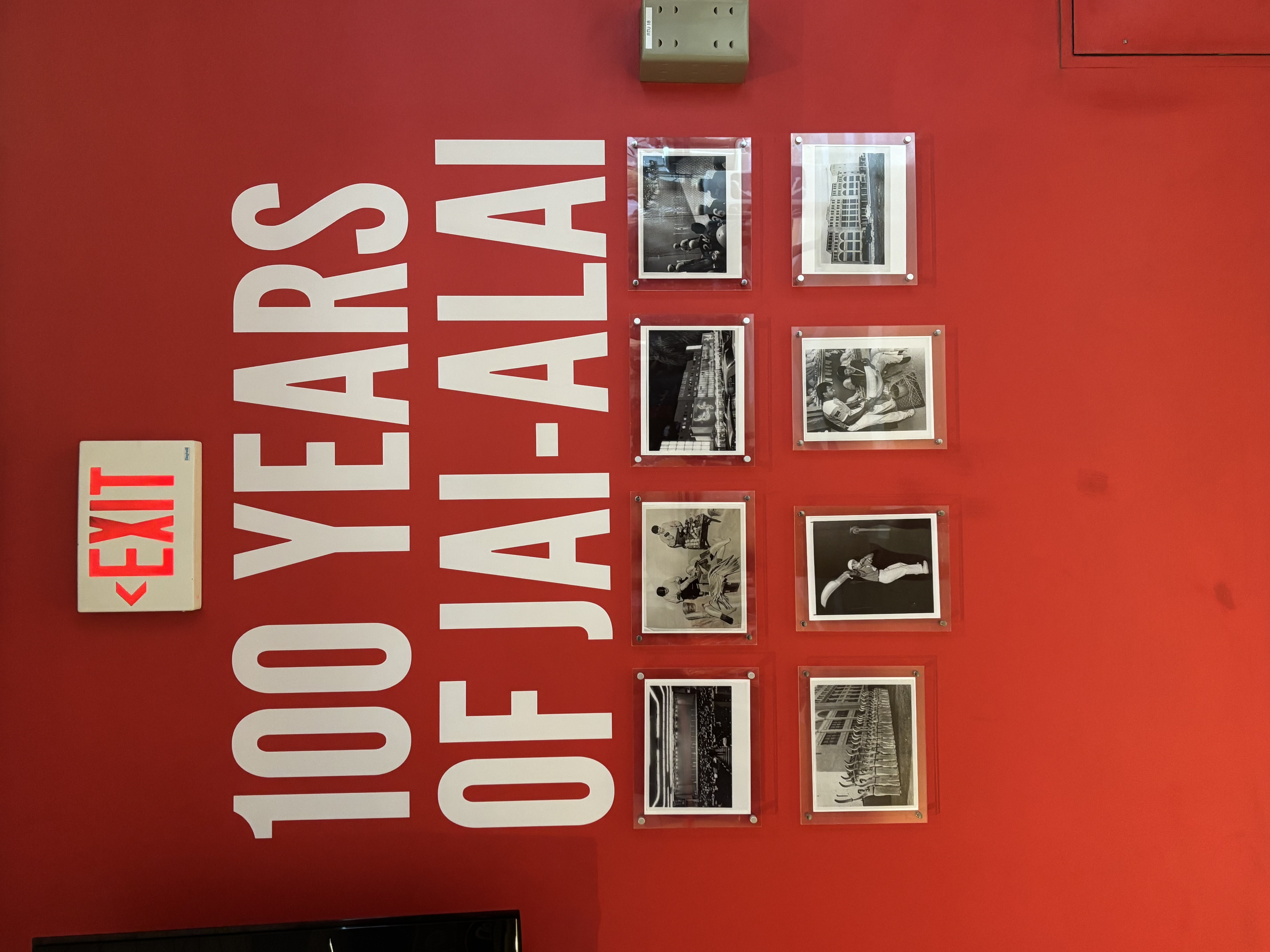
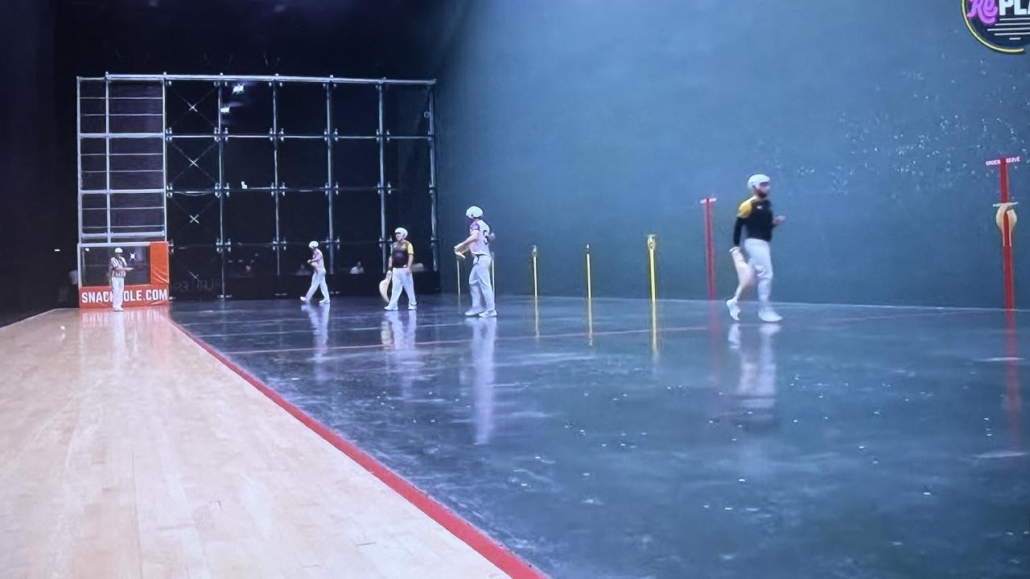
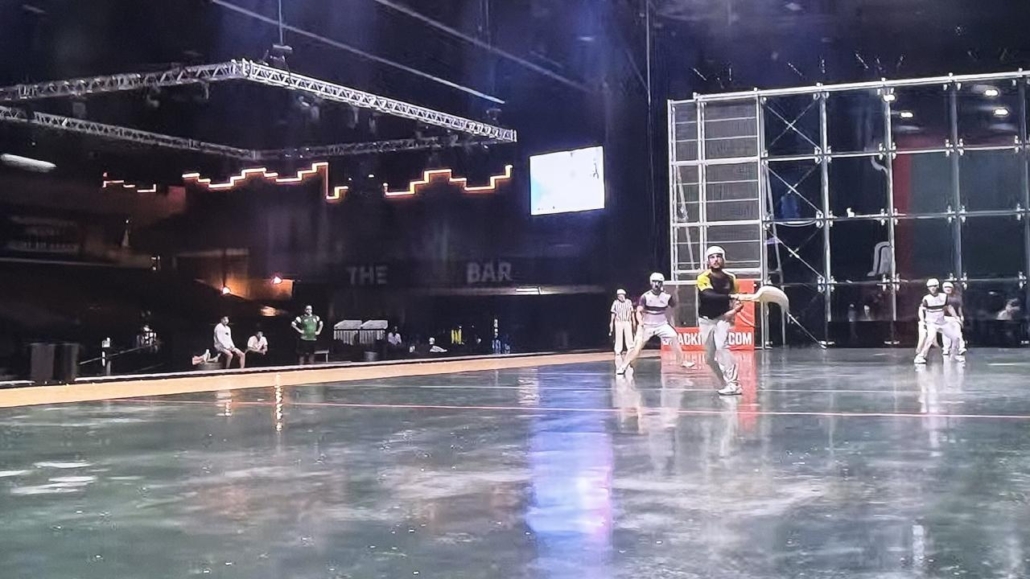
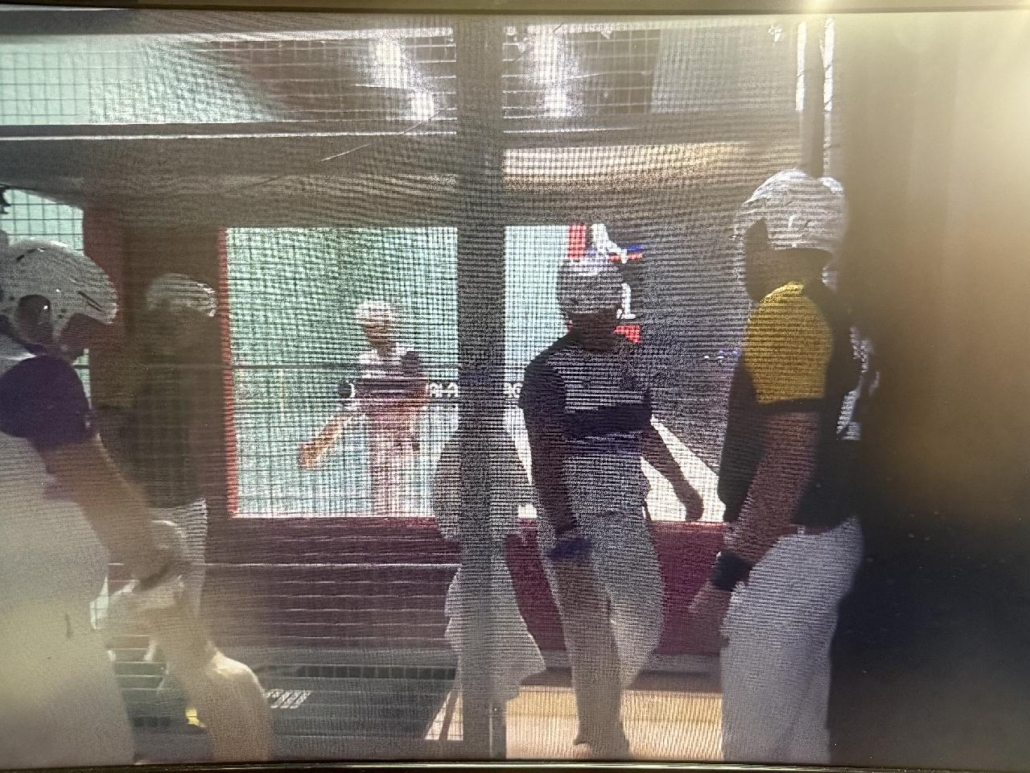
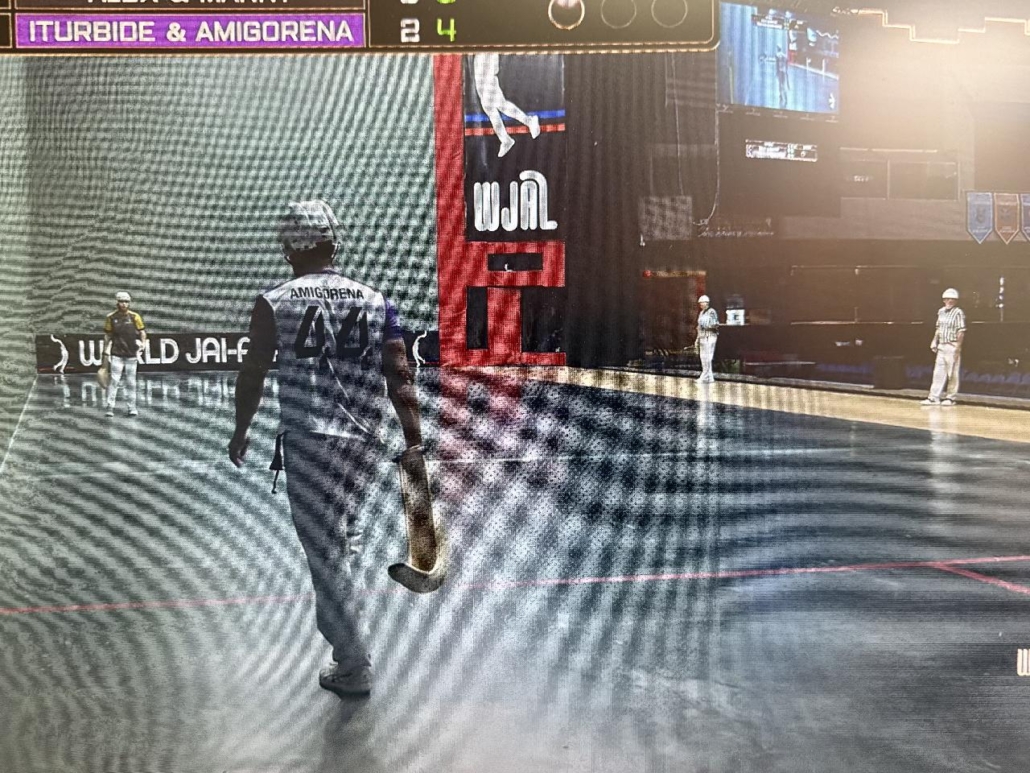
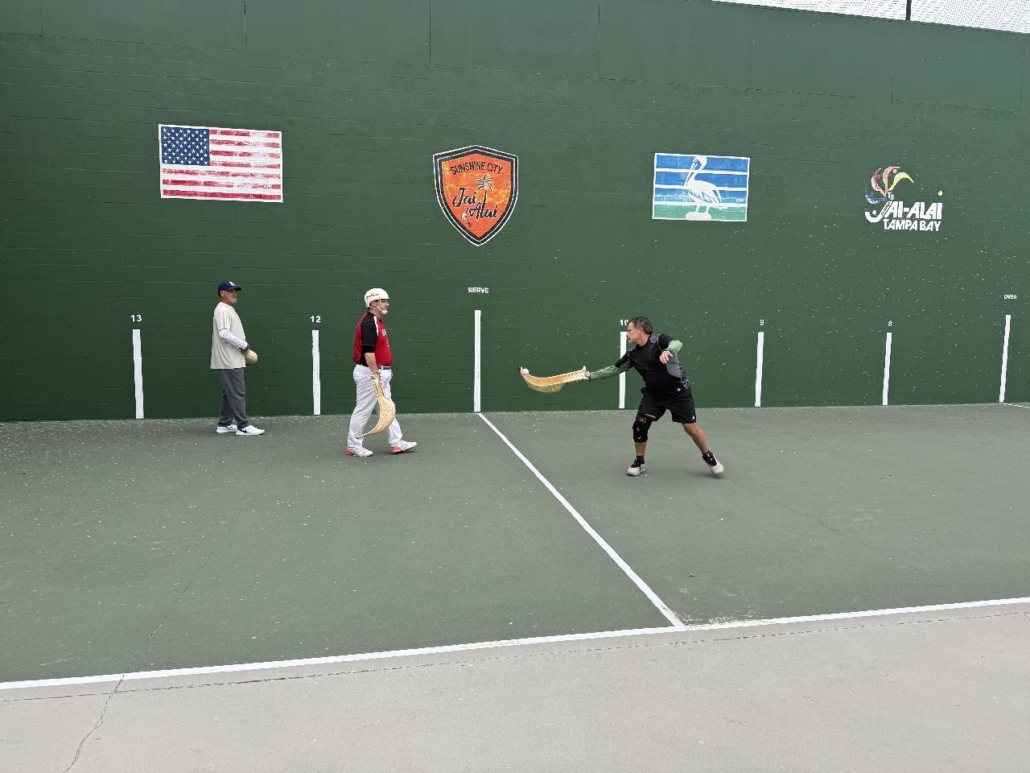
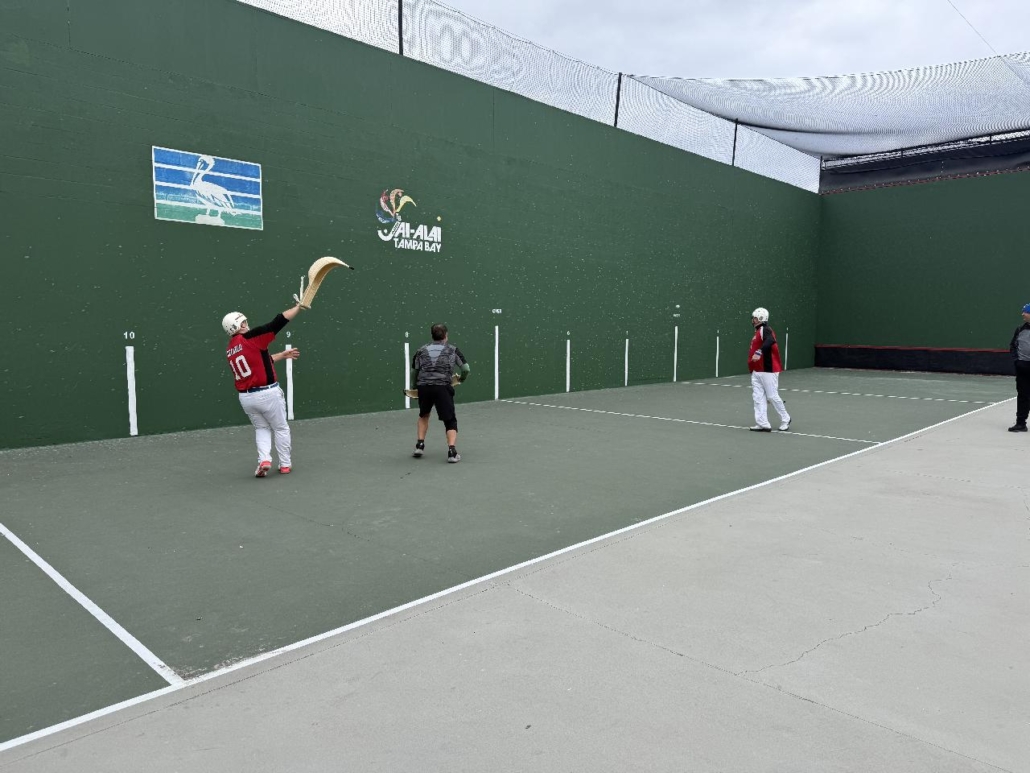
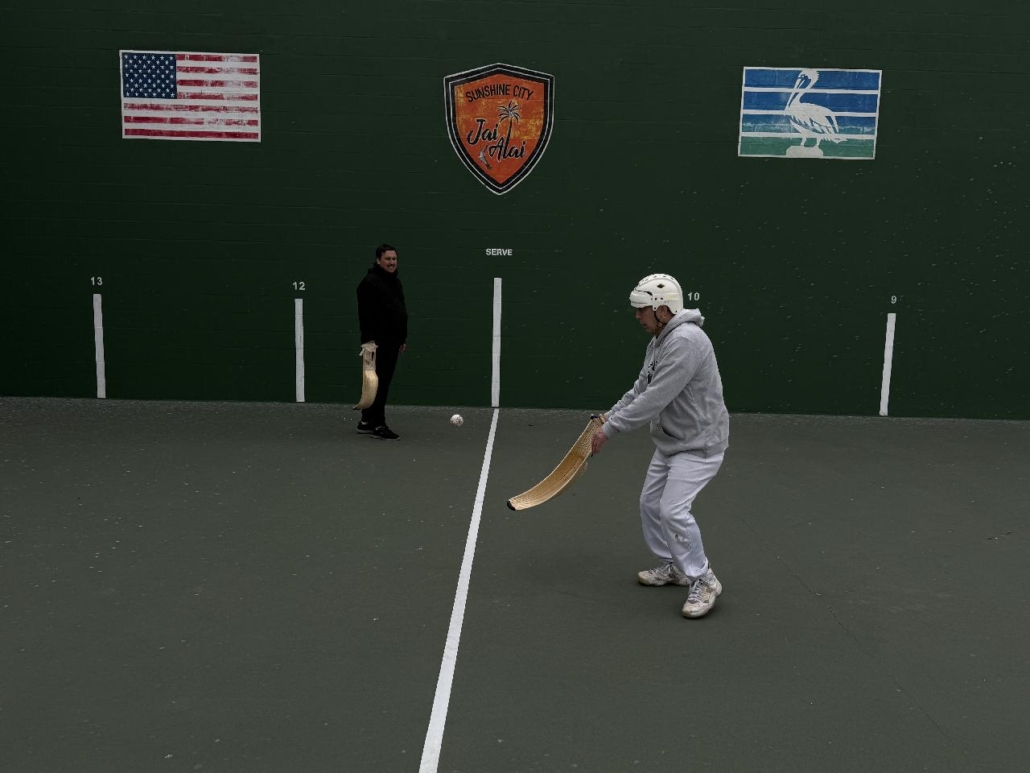
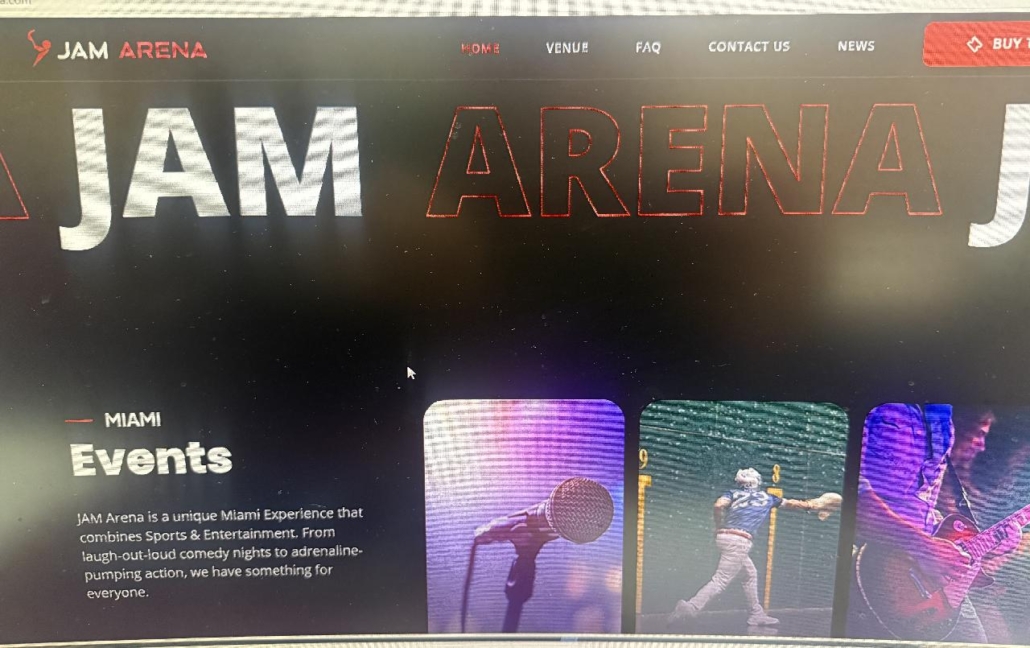
February 16, 2026: Miami, Fla.: The World Jai alai League opened its doors to the public Friday night to a crowd estimated at between 150-200 people as jai-alai has returned to the original home of USA jai-alai. Miami Jai-alai Fronton is now called the JAM Arena (Jai-alai Miami) and is now officially 100 years old.
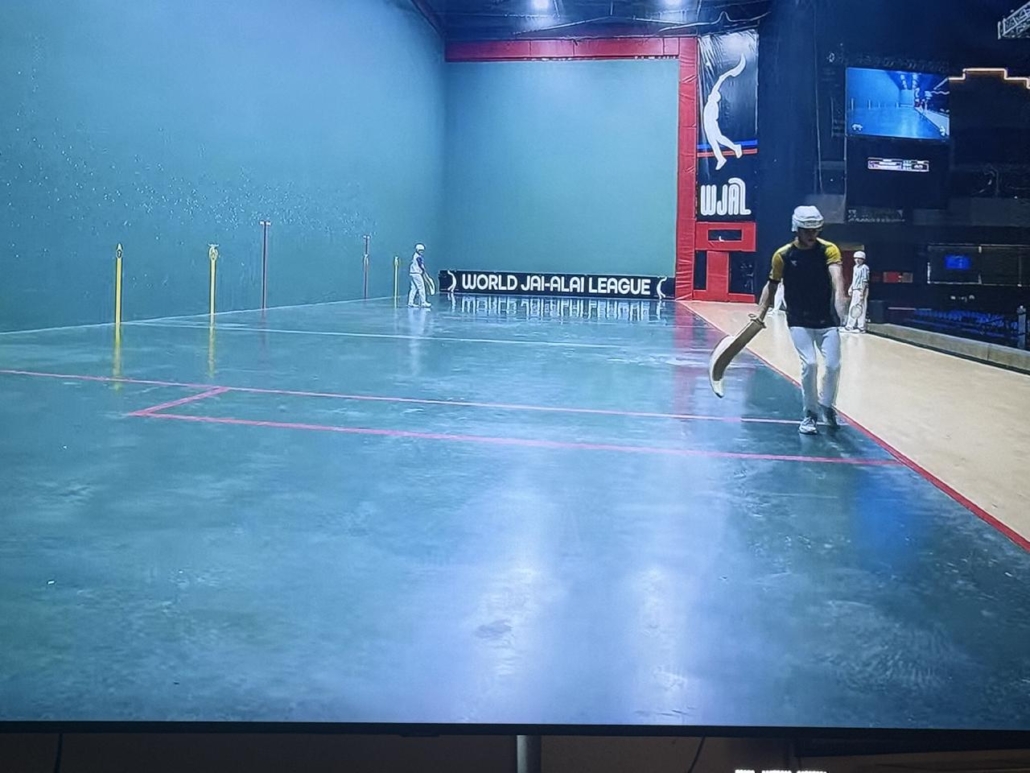
Formally known as Magic City Ja-alai, the new fronton uses the original front and side walls but has added a glass back wall near the serving line area. As reported earlier, the pace of play has slowed somewhat, but the big story is how nice the newly remodeled fronton looks. A multimillion-dollar investment has cleaned up the place what had looked like a war zone for decades. The building now holds 1,500 seats – all fixed up along with enhancements all around and including the lobby area.
Jai-alai was not the only activity to make place there, as a comedy show followed the jai-alai performance at 11pm. It is not known how many attended that. Tickets for the comedy show were $89 and $99. The next jai-alai performance is Friday February 20th at 7pm while the next comedy show of Matt Friend will be on Friday March 27th.
The only complaint we heard was from people sitting in the VIP area – basically the first 4 rows. Front row seats were $32 and included a “free” drink and “free” valet parking. The seats are below the stage with several large speakers on the stage blocking the view.
Special thanks to George Quinn and Bob Garby for supplying the photos. The Pelota Press was unable to attend as their parent company, The New York Times, did now allow travel reimbursement of $700 a night hotel rooms for 3-star hotels, or $450 for 2-star hotels with optional bed bugs located directly under Miami Airport’s flight path with unbearable noise 24 hours a day. Only successful actors, musicians, and drug dealers can afford living there, I guess.
World Jai-alai League’s New Home at JAM Arena Review
February 11, 2026: The World Jai-alai League had it’s opening day yesterday afternoon at a new location – the JAM Arena – formally known as the “Yankee Stadium” of jai-alai – Miami Jai-alai.
There were lots of good things but on the other hand, there was some bad. It’s the bad that is troublesome.
First the Good News…….
The ball sounded almost like a goatskin pelota coming off the front wall. Love the sound like all of us do. I couldn’t stand the sound of the Magic City court when the ball hit the front wall. Especially when you were there live and in person watching. It sounded like contraction going on. Bam. Bam. Bam. Terrible. With this revised Calder ball they are using smacking the granite front wall, it had that same sound that could be heard 100 years ago on the court.
The screen height is 15 feet higher than the Magic City court. This makes a huge difference for sure.
The court is longer by 6 feet. It is now 126 feet long vs. the Magic City 120 feet.
The court is a few feet wider now. This allows for more carom action. Players touching the out of bounds netting that protects the spectators is much less likely to get hit.
Chick-chaks actually took place.
Now for the Bad News……
Balls hitting the glass back wall had that horrible sound as expected and was very inconsistent in the way they came off the wall.
The rebotes do not come back as far as Magic City did.
Now for the real killer. The pace of play is much slower. The larger court – a much higher front wall and longer court are contributing factors. The ball may have something to do with it too. The original Magic City Jai-alai called or much faster action than the standard goatskin, 175 foot plus long courts. We did not see that yesterday. There weren’t too many pelota’s snagged by the frontcourter in doubles play. Points seemed slow-paced with nowhere near the action of Magic City Jai-alai. Watch the old videos that they were playing before and between games. It was on the old Magic City cancha. I hate to say this, but I think I might be missing the old court even though I disliked the sound of the pelota hitting the front wall and players hitting the overhead screen. Perhaps the players will be better accustomed to the court and things will change. The ball also seemed to slow down later in the performances or something. There was excitement all the time in almost every point on the Magic City court. It’s only one performance and players are still getting adjusted to the new court. But it just doesn’t have that same Magic anymore. I just hope I’m wrong. And it is too early to tell for sure.
Couple more things……
Bring back the banners of ESPN 3, Betrivers, Draft Kings in the players room where they sit between games. It gives everything more creditability.
The court needs painting on the floor to remove the old white lines from the 175-foot version cancha. It was confusing. And on the side wall, Stu can no longer say “It must land between the 4 and 7 lines” anymore. They are out of sync and he and Andrew had a good laugh about it on the live broadcast. Good stuff.
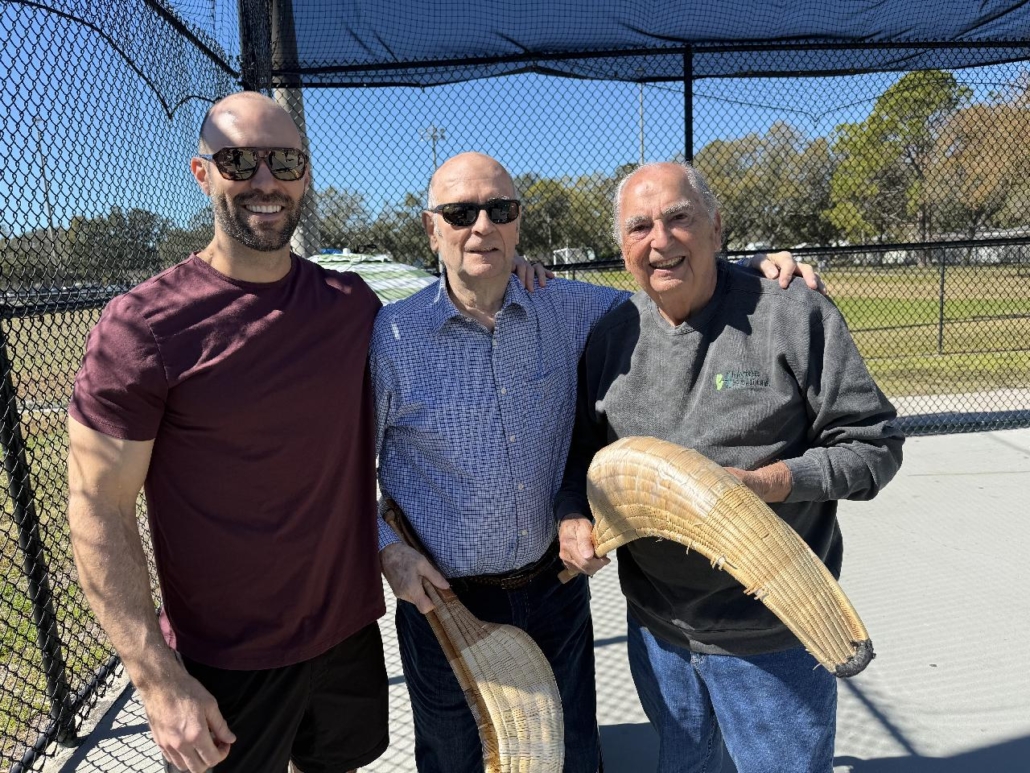
February 10, 2026: It was old-timers’ day last Saturday at Puryear Park with a couple of jai-alai legends showing up to watch.
“Mr. Orlando”, Elorri himself, was there on a make-up visit from missing the Scott King Tournament held the previous weekend. He like dozens of others, wisely stayed home due to the terrible weather of extreme cold and wind on Saturday and more of the same circumstances Sunday but with rain in addition.
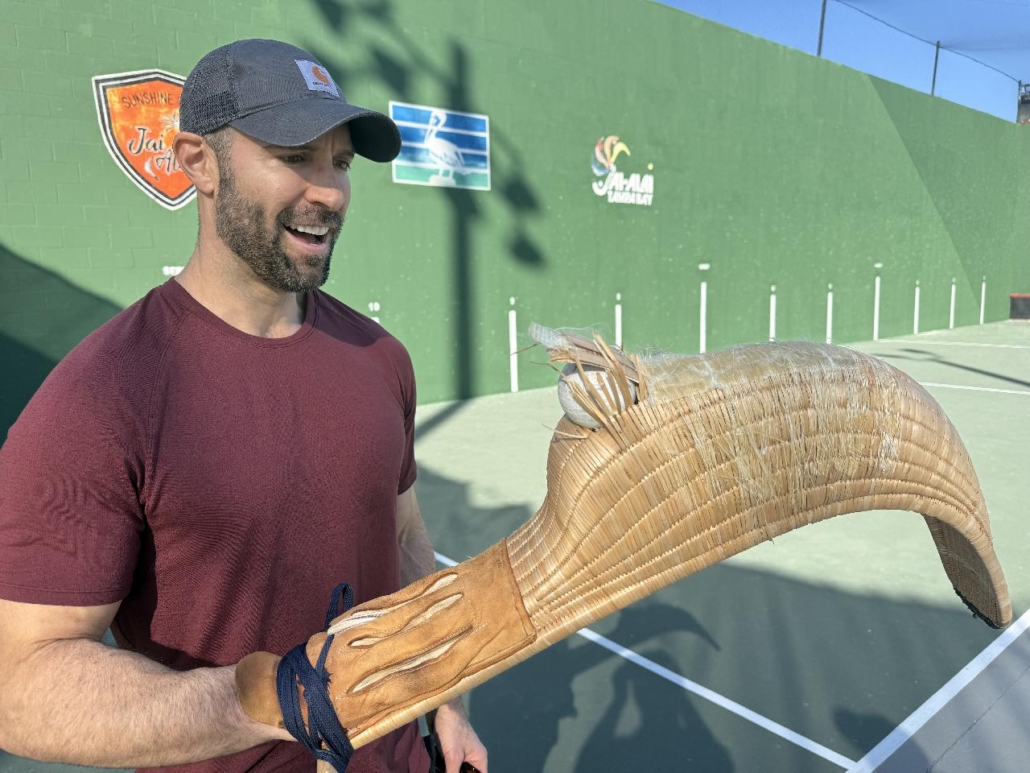
Making a return was former pro Goitia. Author of the popular jai-alai book “The Other Side of the Screen”, Goitia was there along with his son Patrick. Patrick had showed up a couple days before the Scott King event using one of the cesta’s his dad had used in the 80s. Patrick was able to secure a win in his first game with Rastock and played quite well for someone making their first appearance on the St. Pete cancha. But a little later in the performance, a pelota went right thru his cesta – likely from the aging basket sitting in a closet for decades.
It was good seeing Elorri and Goitia again and we welcome Partrick to the roster in about two weeks after having surgery a few days ago.
World’s Oldest Jai-alai Player, Al Almada, has Passed Away at 98
West Hartford: February 9, 2026: The World’s oldest jai-alai has passed away. Al Almada of West Hartford was 98. Not only was he the oldest known jai-alai player in the world – playing into his 90s – he was one of the finest human beings you could ever meet. A true gentlemen in every respect. And boy, did he love the game of jai alai. For someone his age, he was a sharp as one could be and I was lucky to have played with him on the Jai-alai Heaven court, located just outside Hartford many times and at Matt’s court once. Jai-alai was his passion and he played on a regular basis – at least once a week – if not more. Al also made cesta traveling bags, and I still use it today on my travels to Miami, Connecticut, or Cancun.
Ever since “Four Decade Pro” Randy threw the first pelota in the state of Connecticut at the Hartford Fronton, Al was in love with jai alai. Soon after, he started playing jai-alai while he was in his 40s and continued for nearly 5 decades. Al and several other gentleman had their own cancha in the basement of a rec center located on a huge church’s property. They played for decades until the church sadly pulled the plug on their operation with little warning and no valid reason. I was lucky to have also played with Al Almada at Matt’s court once, and he count still catch and throw the ball very well for someone 90 years old. He competed with anyone. His friendship with the fellow players and respect of everyone was immeasurable.
That day at Matt’s court, about 8 years ago, he gave me a collection several pelota’s from start to finish in the assembly of them – goatskin and all. I made a great display of it in the museum that was inside a custom-made wall with a glass covering and a plaque explaining the procedure of the making of a pelota and the donation in his name. In my opinion, it was one of the coolest displays in my museum. It was educational and perfect for a museum that few in the jai-alai world had any idea how a pelota was made. What a great idea Al had. When the museum was flooded 16 months ago, that was one of the first things I checked on to see if the flooding had reached it or not. It came up 46” and Al’s collection he donated was 46 ?” above. Unfortunately, the drywall wall had to come down and the museum was closed.
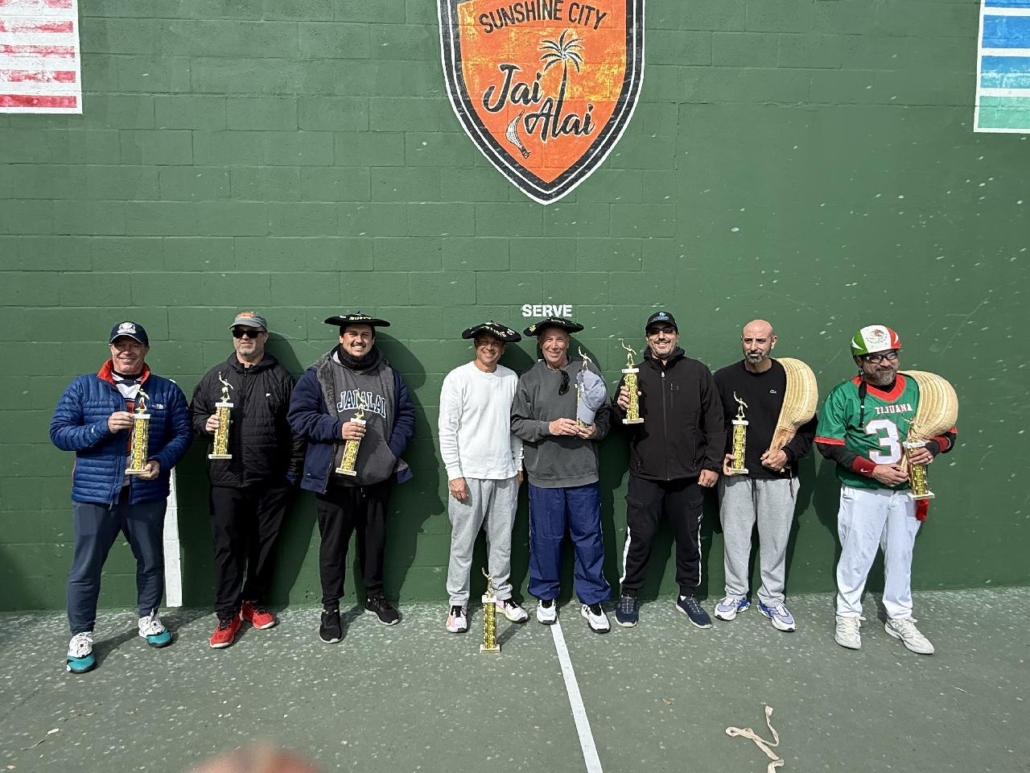
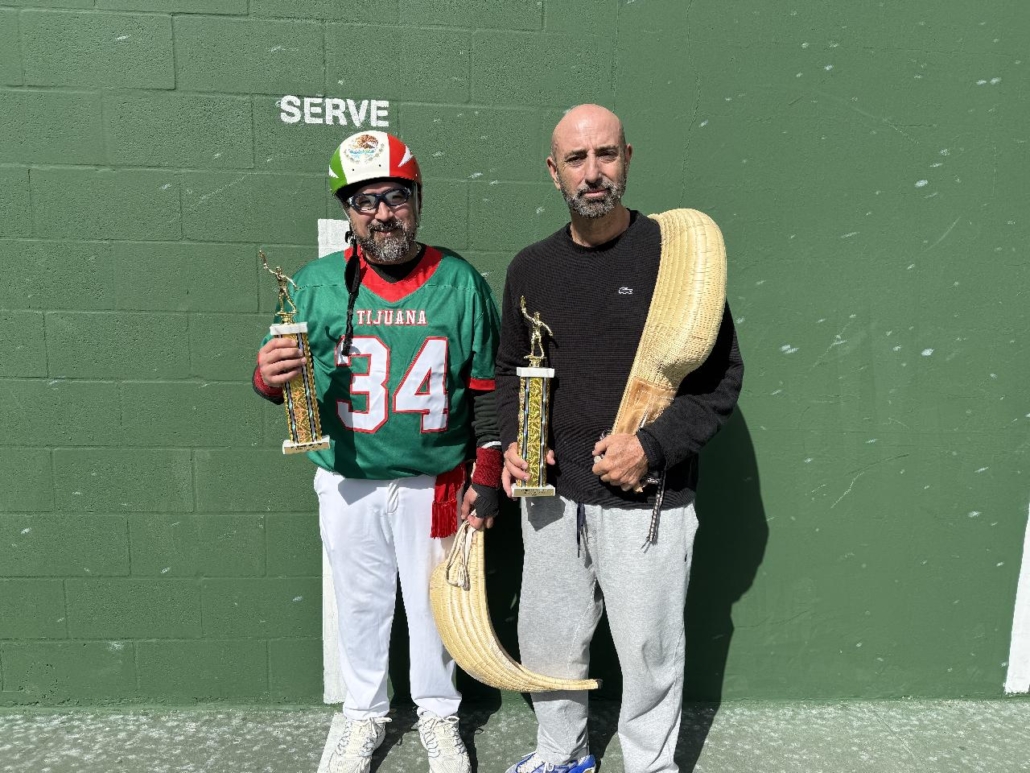
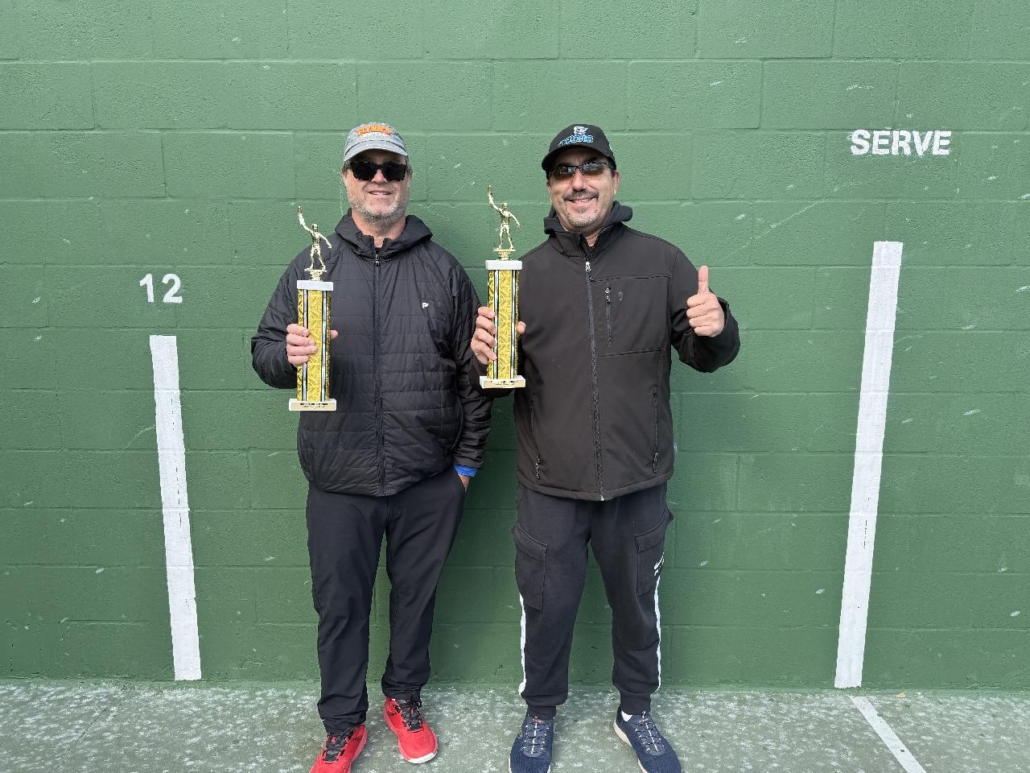
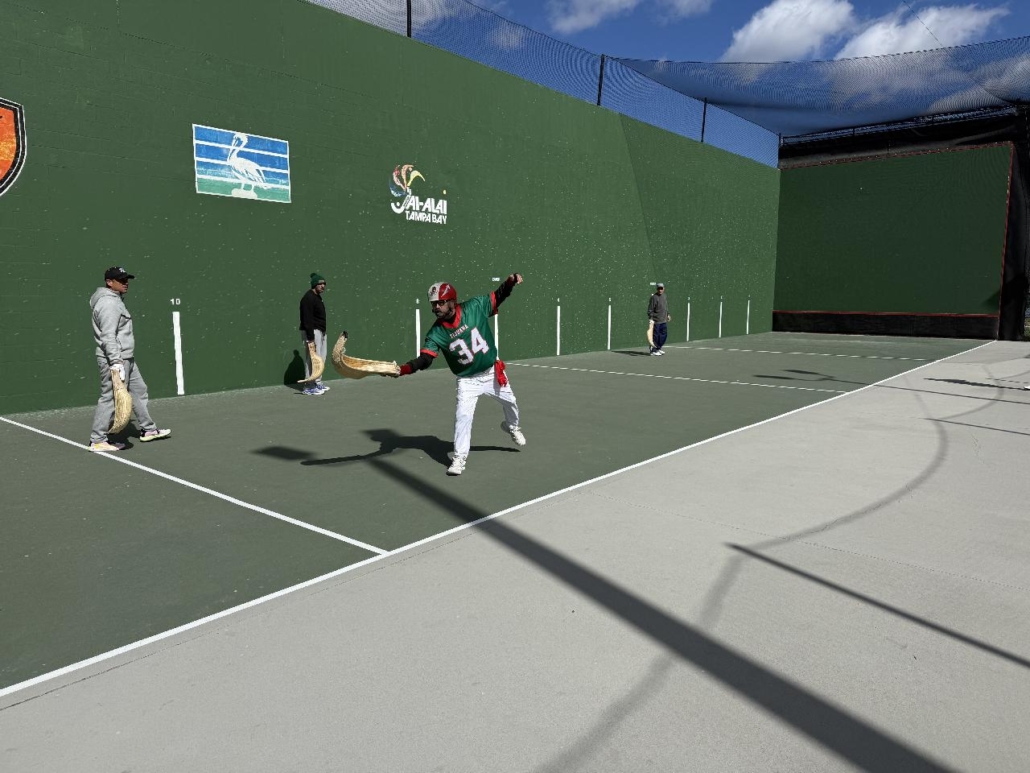
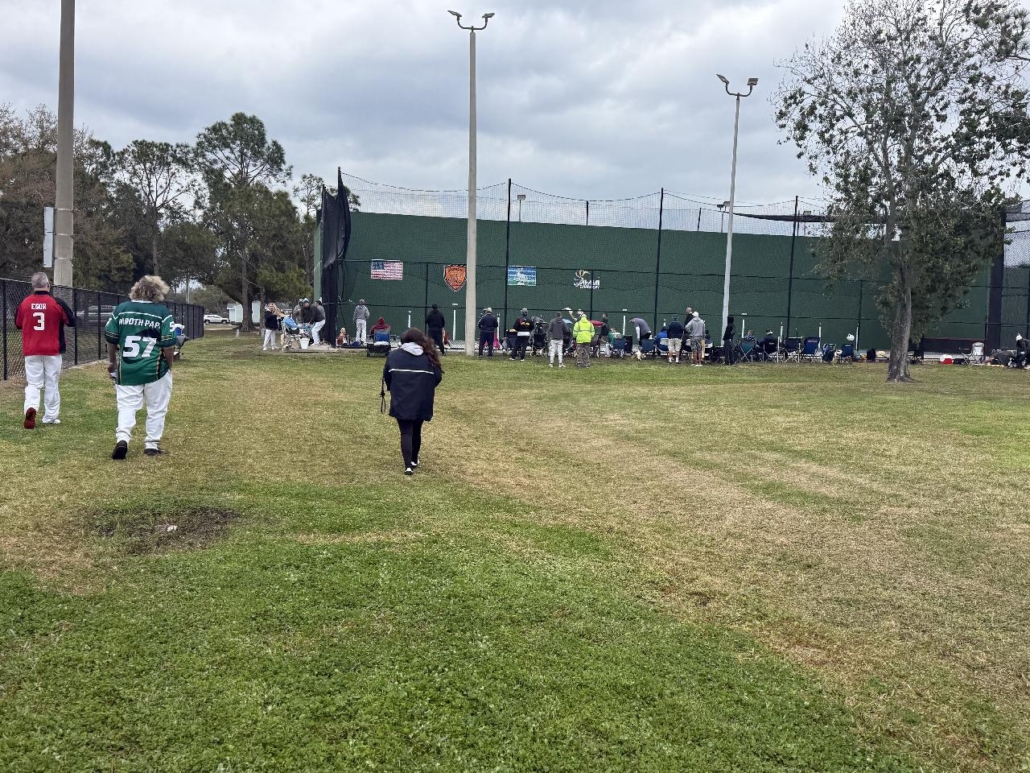
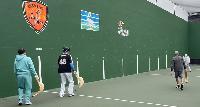
February 4, 2026: St. Petersburg, FLA: Despite some of the worst weather in at least 16 years in the Sunshine State (not counting the hurricanes), the Scott King/Sunshine City League tournament went off without a glitch this past weekend. Yes, it was cold, nasty, extremely windy and then the rain came Saturday afternoon to further dampen the endeavor. Early Sunday morning was greeted with snow flurries 6 hours before the tournament resumed with feel-like temperatures in the upper 20s.
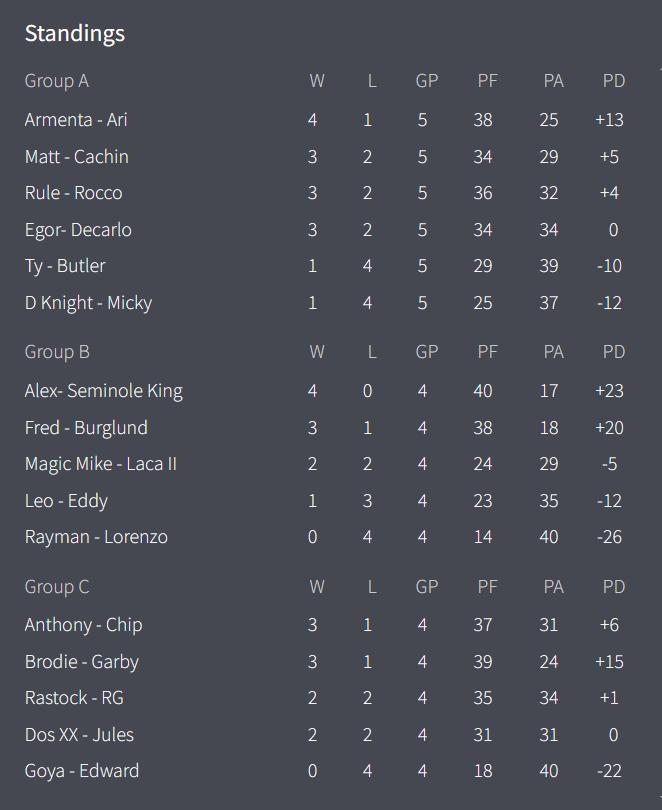
Before a crowd of 64 over the 8-hour day Saturday and about 25 on Sunday, a total of 31 players participated in the 3rd annual Scott King/Sunshine City League event. Several players from Connecticut made the trip as well as several from the Miami area, mostly ex-pros familiar to many in the jai-alai world.
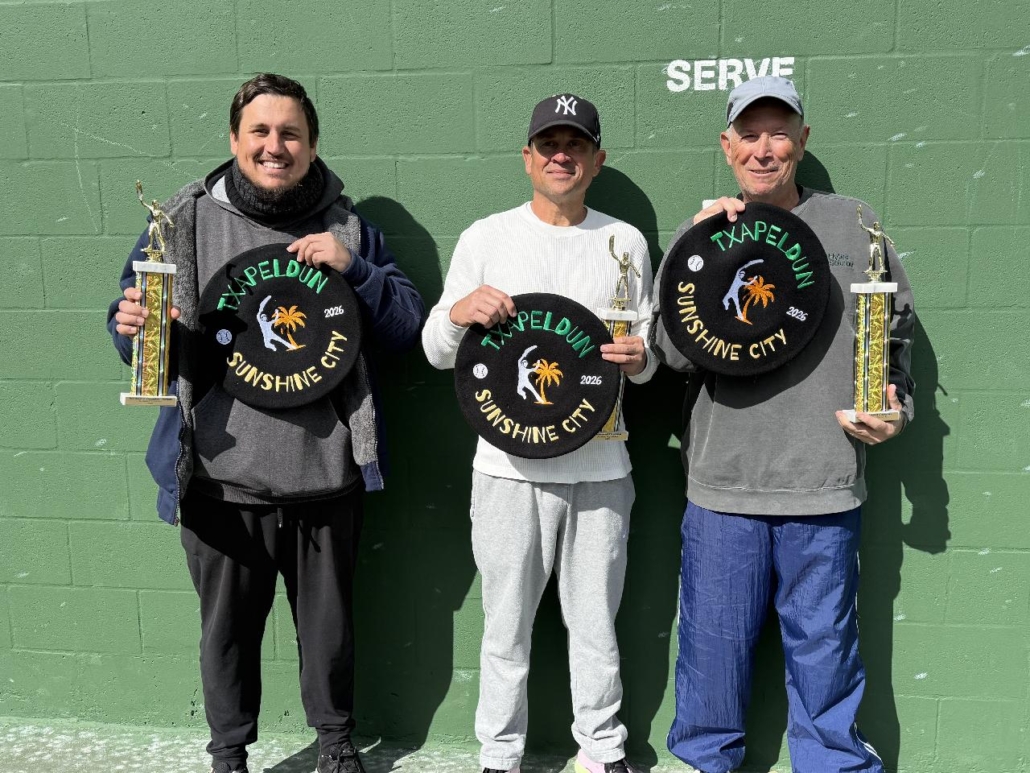
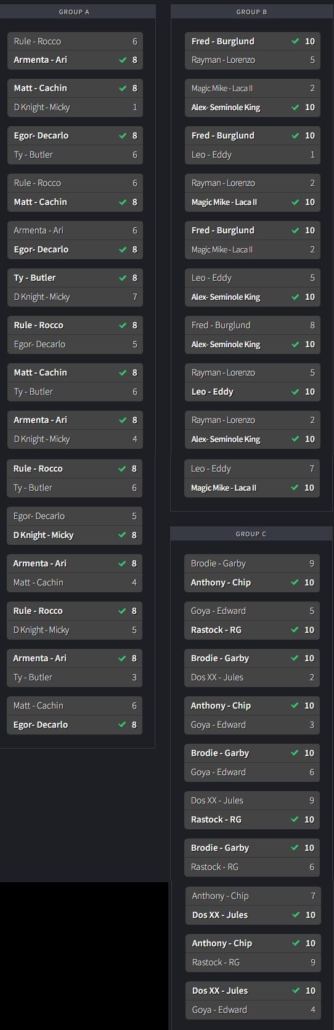
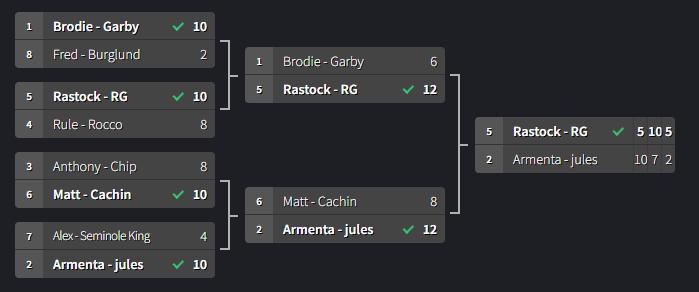
The doubles tournament turned out to be a St. Pete vs. Miami battle and was won by Rastock and RG3. They beat Armenta and Super Jules in overtime. The Miami boys won the first game, 10-5, the St. Pete guys won the second game 10-7, forcing a 5-point winner take all game 3. Rastock and RG3 took that game 5-2.
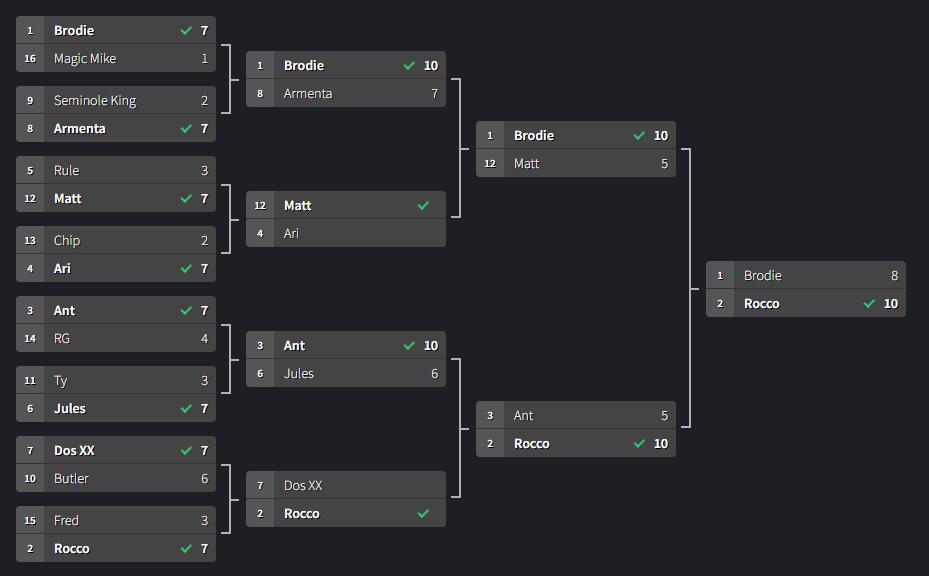
The singles tournament came down to two St. Pete regulars. That event was delayed a day to Sunday and was mostly players from the St. Pete roster that participated. One of the best exchanges of a point involved Rocco and Brodie in the finals. The video can be viewed compliments of tape sent to the Pelota Press by Armenta. Rocco took the contest 10-8 over Brodie.
The B League tournament was won by Seminole King and Alex.
Overall, the event was fun despite the weather. It was good to see the out of towners from Connecticut and Miami come dressed as jai-alai players as opposed to the regular St. Pete players who normally don’t get dressed up – including the guy writing this story who normally won’t even wear a shirt and wears $4 shorts bought at Walmart.
You can track all the players, the game-by-game results and view numerus photos below in this story. A special thanks to Scott King for putting on his 3rd annual event and we look forward to next years event. And a special thanks to all those the donated to the court for keeping it up to date despite thousands or games being played on it yearly.
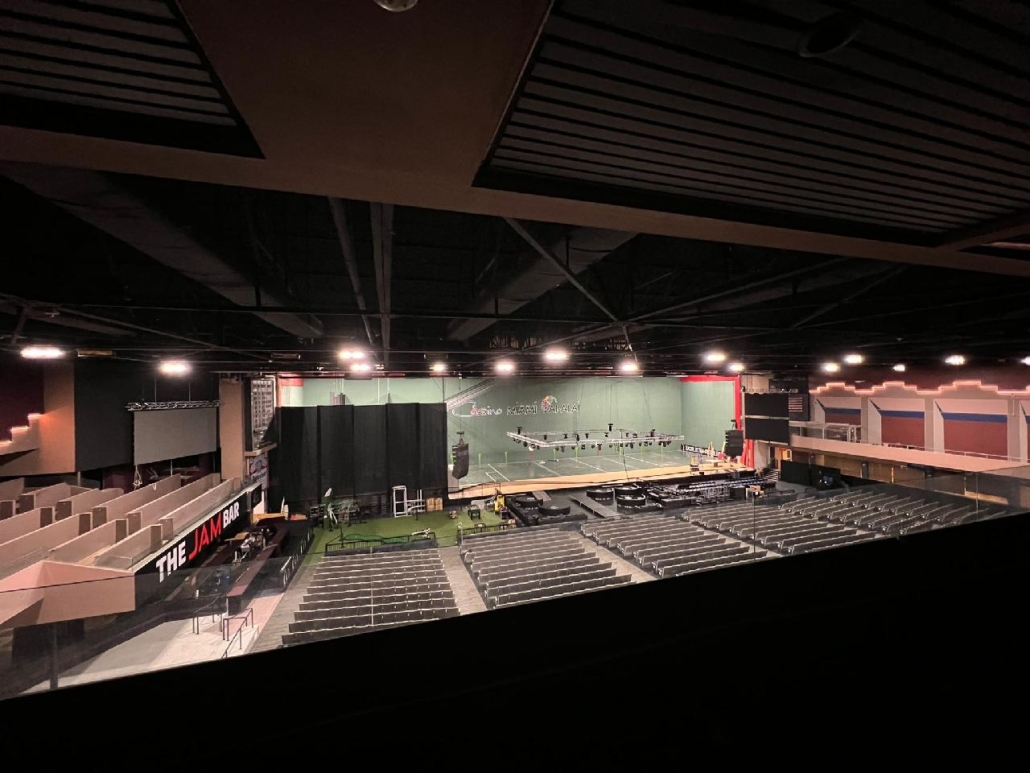
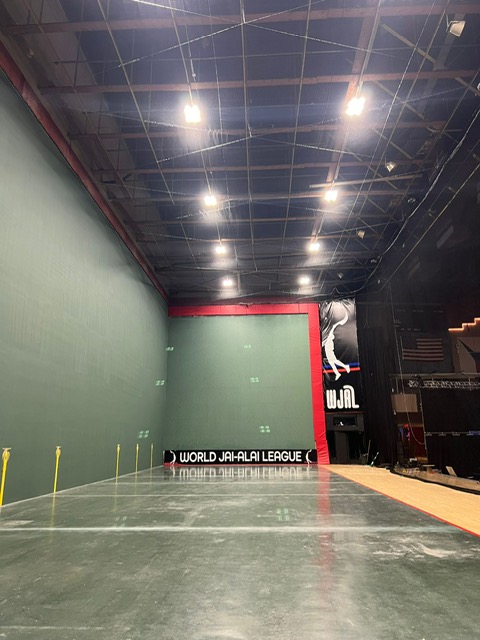
Miami: February 4, 2026: We have some new images of the new Jam Arena – the former original Miami jai-alai fronton that will be hosting the newly located World Jai-alai League.
As you can see, the 1,500 seats have been fixed up, furniture and chairs from the Magic City location moved up to the front for a VIP experience and much more improvements completed. The court has been redone, with a glass back wall (not visible in the photos) on the 126-foot long cancha.
The new Jam Area will open this coming Tuesday for the new season. However, spectators will be forbidden from entering the building until Friday, where the Friday only admission is in effect. I personally don’t like it and makes planning a long-distance trip to visit for a 3-hour night hard to justify with $300 “Motel 6” like hotel rooms this time of year.
The season opens Tuesday the 10th with the Warriors and Chargers squaring off at 3pm. YouTube will have to be your way to watch.
January 29, 2026: St. Petersburg, FL : Ever play jai-alai in the snow? Perhaps in the Basque region on the mountains and all if your outside. But in central Florida? Highly doubtful.
That might come to an end as there is a 20% chance of snow flurries early Sunday morning, and that will be during the second day of the Scott King/Sunshine City League’s big annual event where 30 players from all over the USA compete. To make things even weirder, across the bridge in Tampa will be a Boston Bruins-Tampa Bay Lightning HOCKEY game played outdoors at Raymond James Stadium in front of 70,000 people. All the worries of the ice melting in what was called hockey’s biggest challenge ever will be greeted with temperatures in the upper 30s by the end of the game.
The last time it snowed in central Florida was in 1977, nearly 50 years ago and that is the only known time in recorded history it has snowed in the area. Playing jai-alai in the cold and extremely windy conditions is going to be tricky especially with 35mph winds Saturday, the first day of the event. However, the side and back wall will block out the NW winds and it might not be that bad.
The event starts at 10am with “free” admission and all are welcome. The cancha is all fixed up and ready to go. Special thanks to Scott King and Eric Lanctot for getting the repairs all done and to all those the helped out in the painting party. Donations are certainly welcome to help preserve our public court – the only one in the country! And always a special thanks to Paul Kubala and Tom “Corky” DeMint, Bill Foster and others to making it all happen 18 years ago!
JAM Arena to Open Doors with Jai-alai and Much More
Miami: January 28, 2026: The former Miami Jai-alai facility has sat dormant for many years, outside of a very short “season” of jai-alai played yearly before decoupling was approved nearly 5 years ago. The seats were literally falling apart; the old 1988 large TV sets were still showing the live game action in the lobby area with a cashier teller and a few betting machines. The courtside bar still had the Bud and Bud Light taps on the kegerator. Players easily outnumbered the spectators. I remember going one year on Opening Day and in the audience was me, Jesus, and Jeden. All three us loved the game like many of you reading this do . A far cry from the day over 15,000 fans crowded in there for a night performance just after Christmas..
When multibillionaire Phill Ruffin bought the property on December 3, 2018 they had some big plans. Yes, that Phil Ruffin. Good friends with Donald Trump. Owner of the Tresure Island Hotel and Circus Circus in Vegas, many hotel resorts, convenience stores, oil production, and the world’s largest manufacturer of hand trucks. One of the plans was to convert the jai-alai fronton into a Cirque du Soleil while running the bustling casino adjacent to it. Unfortunately,, the pandemic hit, and plans fizzled. Today, the casino looks gorgeous with a pizza parlor, live band stage and much more, but the fronton was falling apart and off limits to anyone to ventured over there.
When Magic City owners sold their property located a couple miles south of (now known as Magic City Casino) to an Indian Tribe, they had to move out by December 31, 2025. The Havenick family had operated the facility under “West Flagler Associates” as a dog track for over 71 years and was sold to the Alabama based Poarch Band of Creek Indians. Oddly, they went into the jai-alai business even though they didn’t have to.
Looking for a new home, they turned to the Miami Casino. The fronton was dormant while everything else had slot machine action and more going on daily. Scott Savin and company turned to Dan Licciardi, the GM and VP of Casino Miami. Dan has had a long history in jai-alai – and he was even involved in the purchase of the glass court for Magic City! A deal was worked out after Magic City had offers from Vegas and even Rhone Island (if I recall correctly) to move the World Jai-alai operations to their vacant Fronton.
A deal was reached and has been named the JAM Arena, short for Jai-alai Miami. It is undergoing a multi-million-dollar renovation and rebranding project that is designed for a new era and a modern consumer. The 1,500-seat arena will feature state-of-the-art audience amenities including VIP courtside seating and family-friendly sports challenge activations designed to create an immersive fan experience.
The jai-alai court will be 6 feet longer than the Magic City court and a new ball has been found that is similar to the Calder ja-alai ball. They will use the existing front and side walls and have added a new glass back wall that is fully installed. Management and players alike are very happy with it. Previous stories on this are located on this website. Jai-alai is returning the original fronton that is now 100 years old!
You can now purchase VIP courtside seats for $15 or for an additional $15 fans can upgrade their night with a “complimentary” beverage and “free” valet parking.
The public is only allowed in the building Friday nights for jai-alai. The very first day they will be open with live sports betting is Tuesday, February 10th . The first day you can watch live is Friday, February 13th at 7pm. The “Chargers” will play the “Cyclones”.
Jai-alai is not the only thing scheduled to be held there. Live bands, other sporting events and live comedy shows with the first one immediately following the jai-alai matches at 10pm. Whitney Cummings and the Big Baby Tour will take place. Seats are $79 and $99 with reserved seats on sale now.
Lets all support them and we wish them the best of luck!
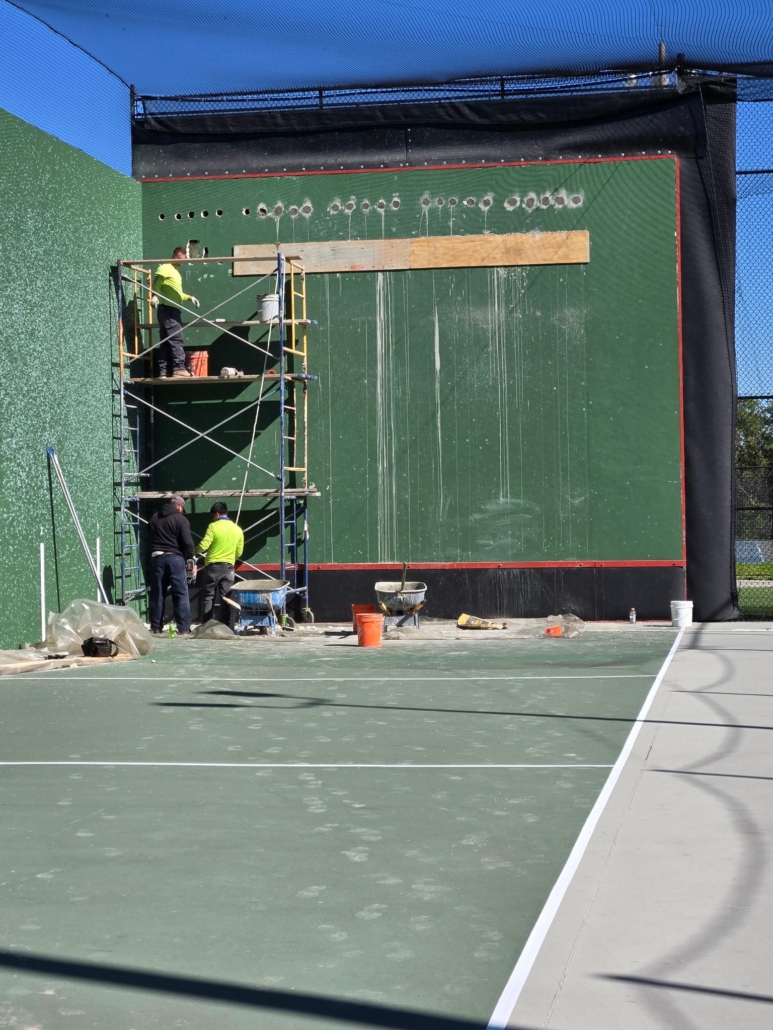
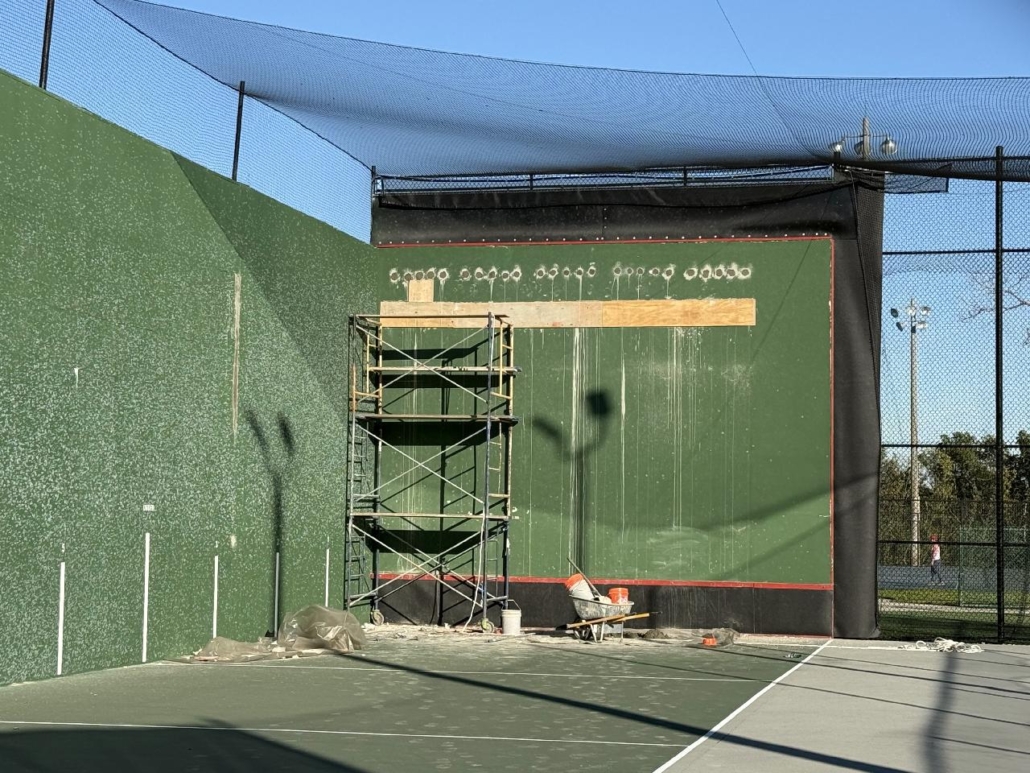
St. Petersburg, FLA: January 16, 2026: America’s first and only public jai-alai cancha will be absolutely closed till further notice – at least till next Thursday, January the 22nd.
As reported to the Pelota Press by one of our contractors, Eric Lanctot, excellent progress was made on the front wall today and yesterday, but more concrete and masonry work will need to be done on Monday with pressure washing, caulking, and painting behind that. There appears to be a lot of work still to be done in the seriously bad area on the side wall, where big hunks of the wall vertically are missing. This is listed as a transition crack, and some work has been done on it today.
All the cells on the front wall were being filled in this afternoon. They can be noted on the home page of this site and shown first here in the photos.
Contractor Scott King is scheduled to do a sign off inspection on Thursday if all goes as planned.
Prior to Magic City Jai-Alai in 2018 and the subsequent creation of The World Jai-Alai League and of the Battle Court Jai-Alai team format most Americans who knew about Jai-Alai either remembered it from the opening credits of the ’80’s TV show “Miami Vice” or as a once exciting & unique sport described by their parents & grandparents.
The exact origins of the sport itself have been largely based on oral histories, but consistently centered on the “Basque Ball” (primarily handball) originating the Basque region of Spain & France sometime in the 15th Century.
When it comes to Jai-Alai in the United States it was long believed that what we now know as the sport of “Jai-Alai” (a ball caught & thrown using a wicker basket) was first introduced to Americans at the 1904 World’s Fair in St. Louis Missouri for two months during “The Louisiana Purchase Exposition.” More in-depth research by Juan Zulaika, citing the translator-writer Asun Garikano uncovered now digitized documentation that the first professional Jai-Alai played in the United States occurred in San Francisco, CA in 1901.
References to “The Eder Jai” appear in “The San Francisco Call” in 1901 & 1902 which was published until merging with “The Post” in 1913. The facility is described as being in San Francisco’s Central Park. It was an open-air court measuring approximately 200 feet and was built at a reported cost of $35,000. 15 Basque players and a Player Manager, who also had played in Mexico City comprised the first roster. There were 4 matches a week “with the handling and speed of the ball fascinating spectators and provoking expressions of enthusiasm.” Individual entry was $1.00 with “boxed seating” selling for $10.00.
No additional references for this first Jai-Alai facility have been located and Jai-Alai is next described in the United States as part of the 1904 World’s Fair. Construction of the $190,000, steel & brick building began in 1903 with seating for 6,000. The Jai Alai Building was constructed at DeBaliviere Boulevard and Kingsbury Avenue in St. Louis, Missouri as a venue for the sport jai alai during 1904’s “Louisiana Purchase Exposition. Jai alai was played in the building for just over two months. The last game was played on July 24, 1904. The games were scheduled to resume on November 1, but the players never returned. Speculation was that the sport didn’t succeed in St. Louis because gambling wasn’t allowed. However, the Cuban promoters claimed that while spectators could bet on the games in their country, it had never been their intention to introduce betting in St. Louis. The building was later converted into a roller-skating rink and was perhaps best known as the popular “Winter Garden Ice Skating Rink” in the 1920s and 1930s. The building was demolished in 1964 to permit construction of a shopping center.